
SUP with Your Dog: The Complete Guide to Paddleboarding with Your Best Friend

Can Dogs Really Paddleboard?
Scroll through any European SUP community on Instagram and you’ll see them everywhere: spaniels perched on board noses, labradors sprawled across deck pads, terriers wearing tiny life vests with visible pride. Dogs on paddleboards aren’t a novelty anymore — they’re one of the fastest-growing corners of the sport, and for good reason.
SUP is one of the very few watersports you can genuinely share with your dog. There’s no engine noise, no speed, no sudden movements — just a slow, stable platform gliding over calm water, which most dogs read as an oversized, slightly wobbly dock. Dogs that enjoy car rides and boat trips usually take to paddleboarding within a session or two.
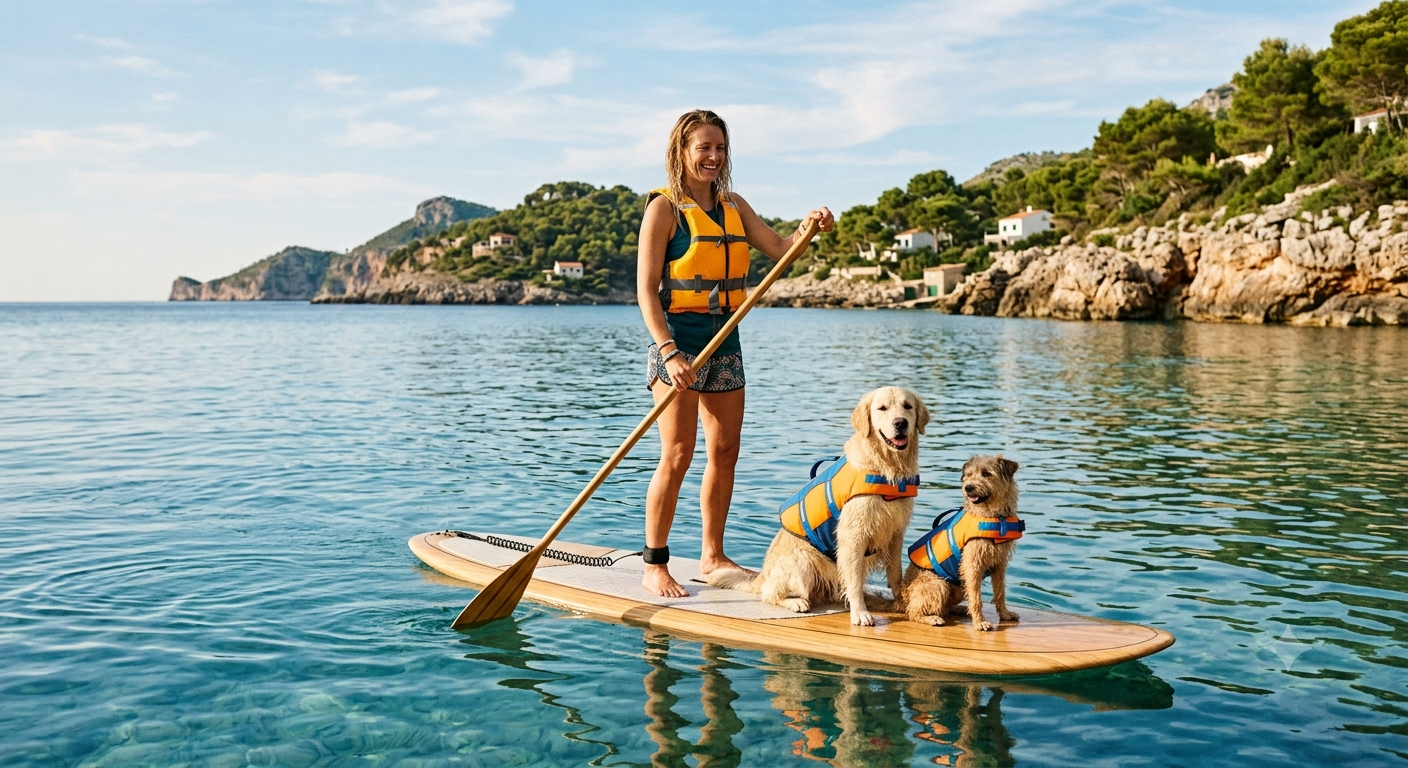
But “most dogs can” comes with two honest caveats. First, your dog needs basic obedience — a reliable sit, stay, and recall. A dog that bolts after every duck will turn your board into a catapult. Second, you need to be a confident paddler before adding a passenger. If you’re still finding your own balance, spend a few sessions with our complete beginner’s guide first — a moving dog on a wobbly paddler is how everyone ends up swimming.
Why Your Dog Needs a Buoyancy Aid — Even If They Swim Like a Fish
The most common objection we hear: “My dog is a brilliant swimmer, why would he need a life jacket?” Three reasons, and they’re the same ones that apply to humans who skip their PFD on calm days:
Distance and fatigue. A dog that swims happily for five minutes at the beach is a different animal 400 metres from shore. Dogs don’t pace themselves — they swim flat-out until they can’t, and by then you have a genuine emergency. A buoyancy aid buys you time.
The rescue handle. This is the feature that makes dog life jackets SUP-specific gear rather than a nice-to-have. When your dog goes in (and they will — usually chasing something), hauling 20 kg of wet, paddling dog back onto a board by the collar is nearly impossible. A sturdy top handle turns it into a one-motion lift. Every jacket in our roundup has one.
Visibility. A dog’s head is a very small object in open water. High-visibility colours and reflective strips mean you — and passing boats — can spot them instantly.
The Same Rule Applies to You
Your dog wearing a flotation aid while you skip yours sends the wrong message to exactly no one — but it does leave you exposed. Most SUP incidents happen in calm, near-shore water. Sort your own PFD first with our SUP life jacket guide, then kit out the dog.
The 3 Best Dog Life Jackets for Paddleboarding (2026)
Three jackets, three budgets, all with the non-negotiables: a solid rescue handle, adjustable straps, high-visibility design, and a track record long enough to trust. We kept it to three on purpose — this is a category where the top products are genuinely well separated.
1. Outward Hound Granby Splash — Best Overall
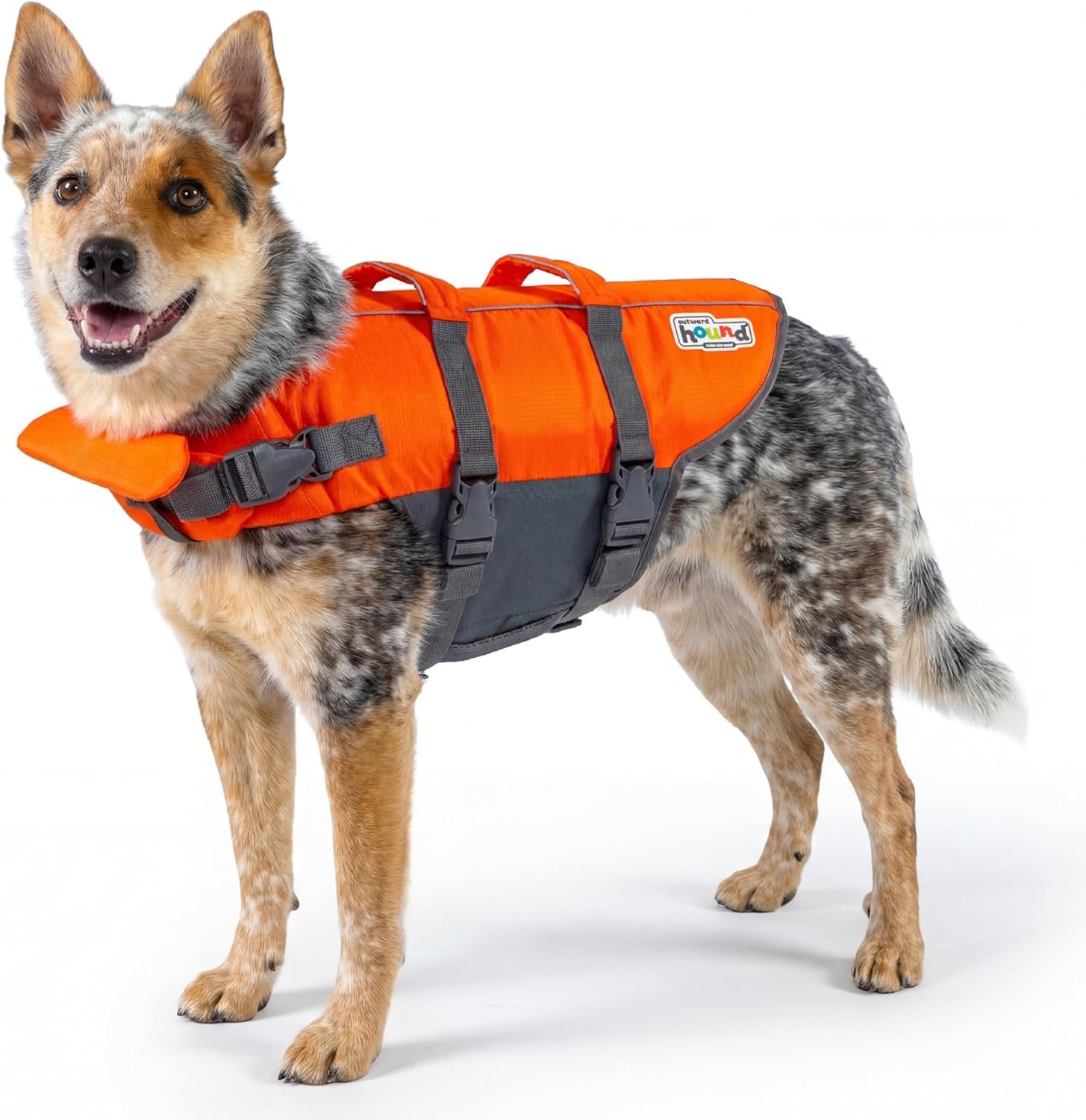
Outward Hound Granby Splash Dog Life Jacket
The Granby Splash earns its place on design. The standout feature for paddleboarding is the front neck float: a panel under the chin that keeps your dog’s head above water after an unplanned exit, exactly when panic paddling starts. Dual rescue handles along the spine make the board re-boarding lift stable and balanced rather than a one-point wrestle. Five sizes cover everything from terriers to retrievers.
Pros
- Front neck float keeps the head up — ideal for SUP falls
- Dual rescue handles for a balanced lift
- Five sizes, bright high-vis orange
Cons
- Bulkier than minimalist vests — some dogs need longer to adjust
- Check stock per size — availability varies
2. EZYDOG Doggy Flotation Device — Premium Pick
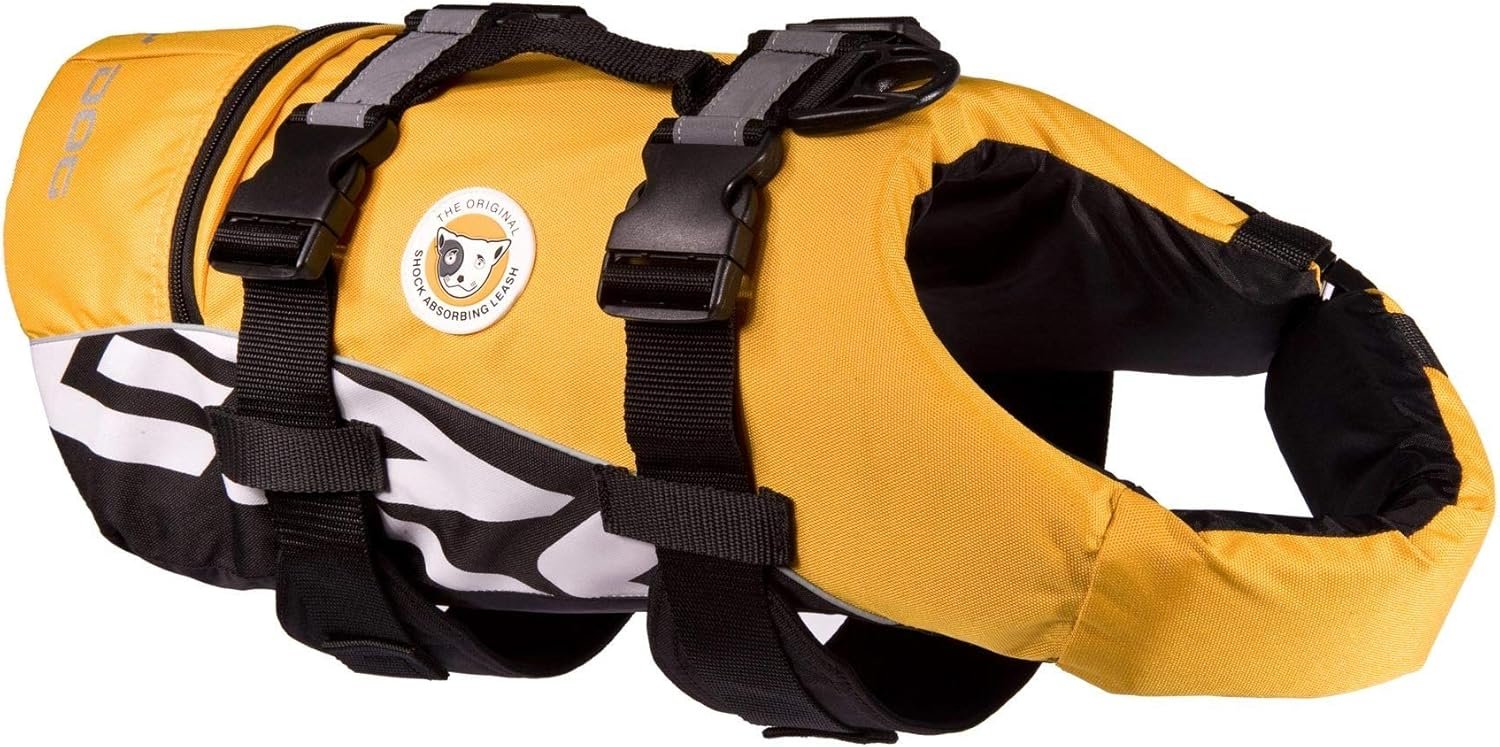
EZYDOG Doggy Flotation Device (DFD)
EZYDOG is the serious name in dog watersports gear, and the DFD is the only jacket in this roundup that names paddle boarding on the tin. What you’re paying for is the build: superior buoyancy foam distributed for a natural swimming position rather than a vertical bob, a proper ergonomic rescue handle, and hardware that survives salt water season after season. It costs meaningfully more than the others; for dogs that will be on the water every week rather than twice a summer, it’s the buy-once option.
Pros
- Designed with paddle boarding named as a use case
- Buoyancy placed for a natural swim position
- Salt-water-proof build quality
Cons
- Most expensive option here
- Overkill for occasional, calm-water-only outings
3. VIVAGLORY Rip Stop — Best Value
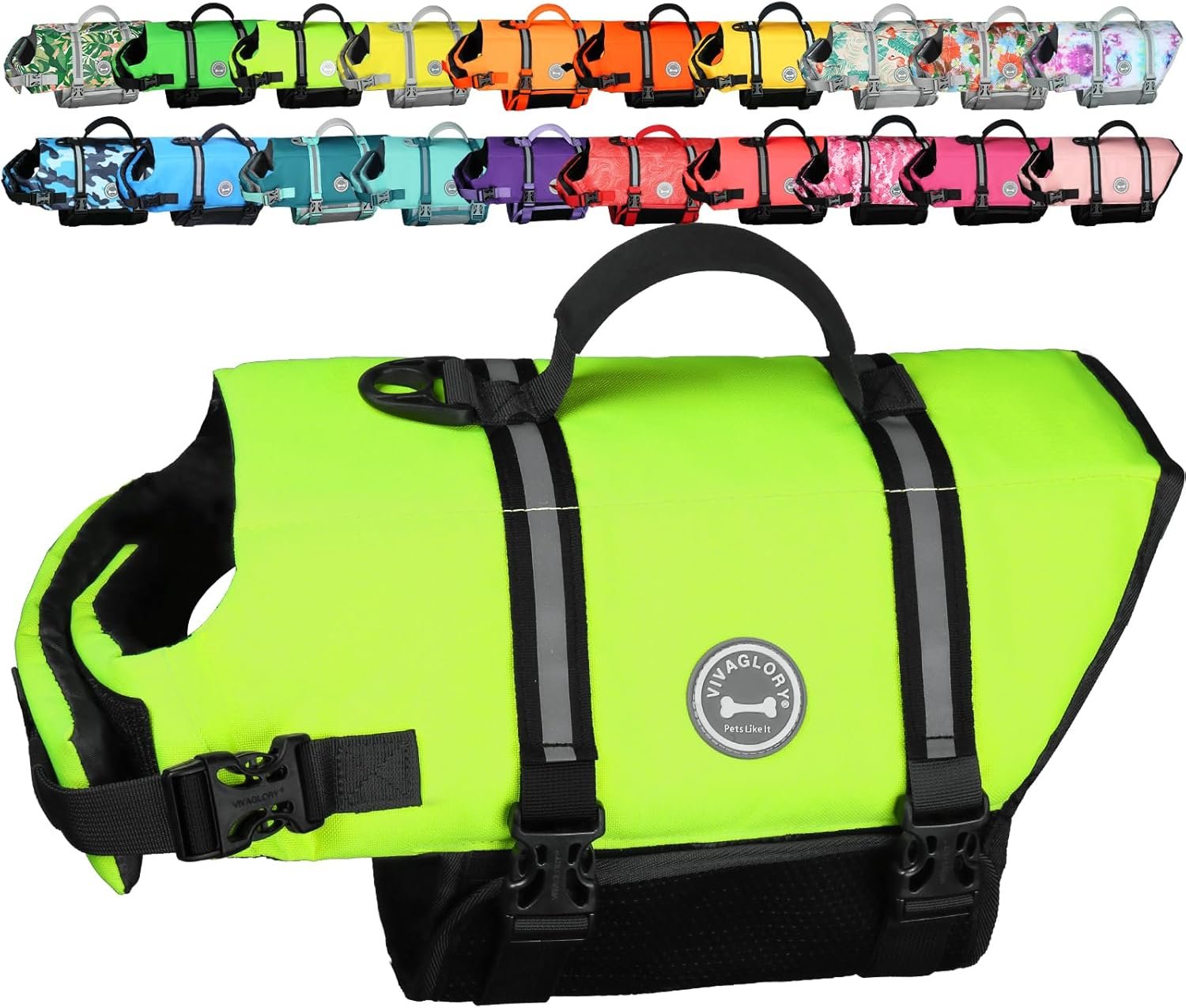
VIVAGLORY Rip Stop Dog Life Jacket
The VIVAGLORY is the budget answer. The ripstop shell shrugs off claws and rocky shorelines, the six-size range (XXS to XL) is the widest here — a genuine advantage for very small or very large dogs — and it includes both a rescue handle and a leash ring, so the same vest works for the walk to the water. It gives up the Outward Hound’s front neck float, which is the honest trade-off at this price: fine for confident swimmers in calm bays, less ideal for nervous first-timers.
Pros
- Widest size range: XXS to XL, six sizes
- Tough ripstop shell, high-vis colours
- Rescue handle + leash ring included
Cons
- No front neck float
- Slimmer buoyancy than the premium options
As an Amazon Associate, mediterransup.com earns from qualifying purchases. This doesn’t affect the price you pay or which products we recommend.
Getting the Size Right: Measure, Don’t Guess
A poorly fitted dog life jacket is worse than useless — too loose and your dog slips out during a rescue lift, too tight and they’ll fight wearing it forever. Sizing is by chest girth, not weight. Weight ranges on listings are rough guides; girth is the real measurement.
Measure the chest girth
Wrap a soft tape measure around the widest part of your dog’s ribcage, just behind the front legs. Snug, not tight. That number in centimetres is your sizing key.
Check each product’s size chart — they differ
A “Medium” varies wildly between brands. Match your girth measurement against the specific chart on the product page, and if your dog sits between sizes, size up.
Test the handle at home
With the jacket fitted and strapped, gently lift your dog a few centimetres by the rescue handle. The jacket should stay put with no slipping toward the head. If it slides, tighten or resize before you’re testing this 300 metres offshore.
The Right Board for a Dog Passenger
Good news: the board that suits a dog is the same board we already recommend to beginners — wide and stable. Three specs matter:
Width: 32 inches minimum, more is better. Every kilogram of moving dog is a balance input you don’t control. The wide, stable boards in our SUP yoga roundup are, not coincidentally, perfect dog boards — several of them even mention four-legged passengers in their own product listings.
Weight capacity: your weight + dog + 25% margin. Most quality inflatables carry 150–190 kg, which covers a paddler and even a large dog comfortably. Check the spec before buying — it’s listed on every board in our beginner board guide.
A full-length deck pad. Dogs need grip and claws need protection from bare PVC. Inflatables win over hard boards here twice: the EVA pad area is usually larger, and the softer surface is kinder to joints when your dog sits or lies down. If the pad doesn’t reach the nose where your dog will ride, a cheap adhesive traction pad fixes it.
Training Your Dog to Paddleboard: 5 Steps
The golden rule: every step happens on land before it happens on water. Rushing to the water on day one is the single most common mistake, and it can put a nervous dog off boards for good. Budget a week of short, treat-heavy sessions.
Make the board furniture
Inflate the board at home and leave it on the living room floor for a few days. Let your dog sniff it, walk on it, nap on it. Reward any interaction. The board must become boring before it becomes fun.
Train a “board” command — on land
Teach your dog to hop on, sit at the nose, and stay until released, all on dry land. Add the life jacket during these sessions so the vest and the board become one familiar package.
First float: shallow, calm, short
Knee-deep water, glassy conditions, five minutes maximum. You kneel — don’t stand — with your dog at the nose. End the session while your dog is still enjoying it, not after they’ve had enough.
Practise the fall — deliberately
In shallow water, calmly help your dog off the board, then practise the rescue-handle lift back on. Do it a few times until it’s routine. The first unplanned swim shouldn’t be the first swim.
Extend gradually — and read your dog
Add standing, then distance, then mild conditions, one variable at a time. Lip licking, yawning, and trying to face the shore are stress signals — head in, end positive, try again tomorrow. Paddling with kids follows remarkably similar rules, by the way — our family paddleboarding guide covers that side.
Paddling with Dogs on the Mediterranean
The Mediterranean Angle
The Mediterranean is close to ideal dog-SUP territory: warm water from May to October, and sheltered, glassy morning bays where a nervous first-timer — canine or human — gets honest, gentle feedback. Two dog-specific rules for the region: paddle early (6–9 AM), both for flat water and because midday deck pads and sand get genuinely too hot for paws; and check local beach rules first — many Mediterranean beaches restrict dogs in high season, though launching from quieter coves like Bencik Koyu usually sidesteps the problem entirely. Bring fresh water for the dog: salt water plus sun dehydrates them faster than you.
Dog SUP FAQ
Where should my dog sit on the paddleboard?
The nose (front) of the board, ahead of your stance. You can see them at all times, their weight helps trim the board level, and they get the best view — which keeps most dogs calm and engaged. Train the position on land first.
Should I attach my dog’s lead to the board or to me?
Neither — never tether a dog to a paddleboard or to yourself on the water. If the board flips, a tethered dog can be trapped underneath it. The life jacket’s rescue handle is your control point. Your own leash stays on your ankle; the dog stays free.
What if my dog jumps off after a fish or a duck?
They will, eventually — plan for it rather than hoping against it. Stay calm, paddle to them (they’ll usually circle back to the board), and use the rescue handle for the lift you practised in training. This scenario is exactly why the buoyancy aid is non-negotiable even for strong swimmers.
Can puppies or older dogs paddleboard?
Wait until a puppy has completed vaccinations and has reliable basic obedience — usually 6 months at the earliest. Older dogs often make wonderful SUP companions precisely because they’re calm; just keep sessions short, help them on and off the board to protect their joints, and let the soft deck of an inflatable work in their favour.
Do I need a bigger board for two dogs?
For two small dogs, a standard 32–34″ wide board with a 150 kg+ capacity usually copes. For two medium or large dogs, look at longer boards (11’+) with higher capacity and, ideally, a full-length deck pad — and train each dog solo before attempting the double act.
Build the Rest of Your Setup
- Best SUP Boards for Beginners 2026 — wide, stable, dog-friendly platforms
- Best SUP Life Jackets & Safety Gear — your own PFD comes first
- SUP with Kids: Family Paddleboarding Guide — the other precious cargo
- Best Dry Bags for SUP — treats, water bowl, and a towel stay dry
mediterransup.com is a participant in the Amazon Associates Programme. As an Amazon Associate we earn from qualifying purchases made through links on this page, at no extra cost to you.