
Firsthand-paddled routes across Turkey’s Aegean & Mediterranean coast
No stock photos, no guesswork — every route on this page has been paddled, timed, and written up by someone who was actually there.
A route map that grows as we publish
Turkey’s Aegean and Mediterranean coastline holds hundreds of possible put-ins — most never make it onto an English-language map. Every pin below is a route we’ve actually paddled, timed, and mapped ourselves. Hover a pin for a quick preview, or tap it to open the full guide.
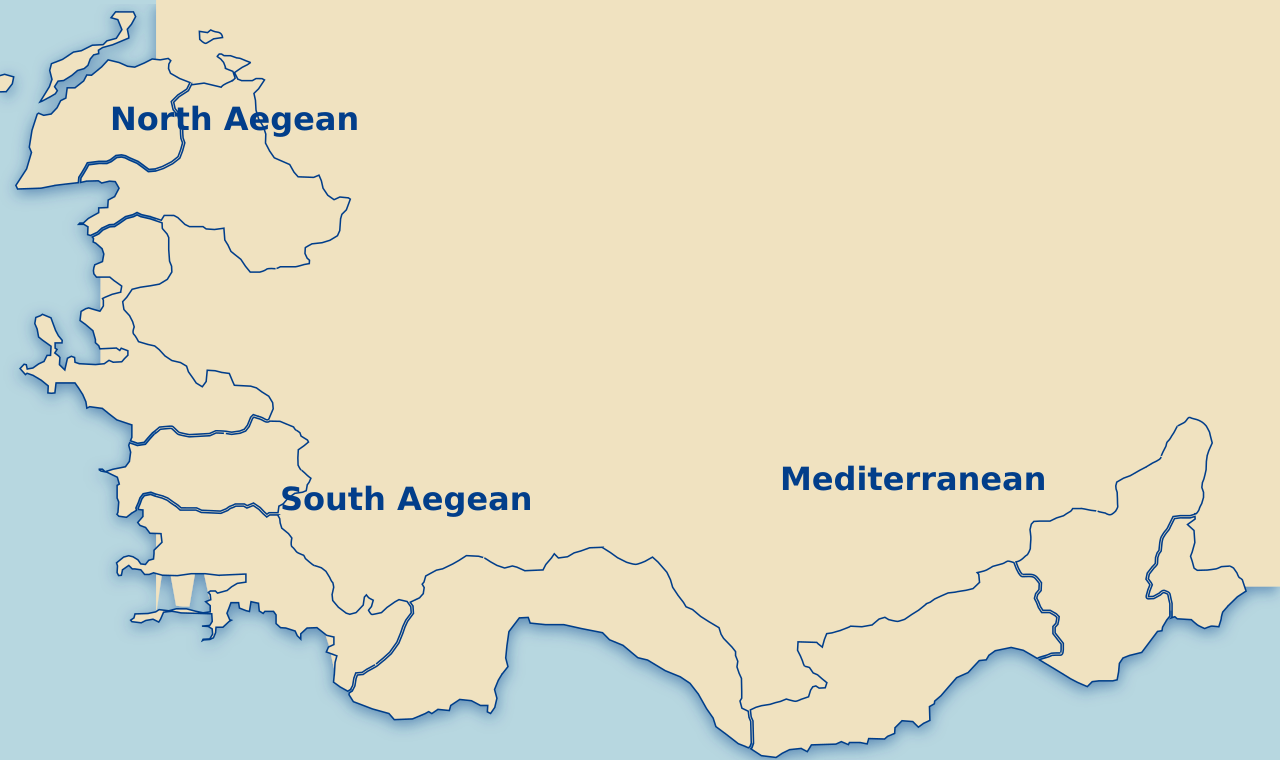
Each pin links straight to the guide. New routes get a pin the day they’re published.
Four routes, four very different moods
If you’re short on time, this is the whole picture: where each route sits, how forgiving it is for a first-timer, and the one window of the day when conditions are actually worth paddling in.
| Route | Region | Difficulty | Best time | Standout |
|---|---|---|---|---|
| Ayvalık Shipwreck Route | North Aegean | Beginner | 06:00–10:00 / 17:00+ | Sunken wreck + Delikli Taş, dead-flat water |
| Ortunç Beach, Cunda | North Aegean | Beginner | Sunrise | Free hidden entrance, current-free bay |
| Bencik Koyu | South Aegean (Datça) | Beginner–Intermediate | 06:00–09:00 | Sheltered inlet, bring your own gear |
| Soli Pompeiopolis | Mediterranean (Mersin) | Beginner–Intermediate | 06:00–09:00 | Paddling past a 2,000-year-old Roman harbour |
Which route fits you?
Never stood on a board before
Start with the Ayvalık shipwreck route or Ortunç Beach. Flattest water, easiest access, no current to fight.
Comfortable on a board, want quiet over crowds
Bencik Koyu is a longer drive and has zero facilities — but you’ll likely have the whole inlet to yourself.
Want history with your paddle
Soli Pompeiopolis is open water with a bit more chop, but paddling past a 2,000-year-old Roman harbour is the payoff.
Traveling with the whole family
Ortunç Beach’s sheltered, current-free bay and easy shore access make it the least stressful option with kids or nervous first-timers.
Explore each guide
Beginner
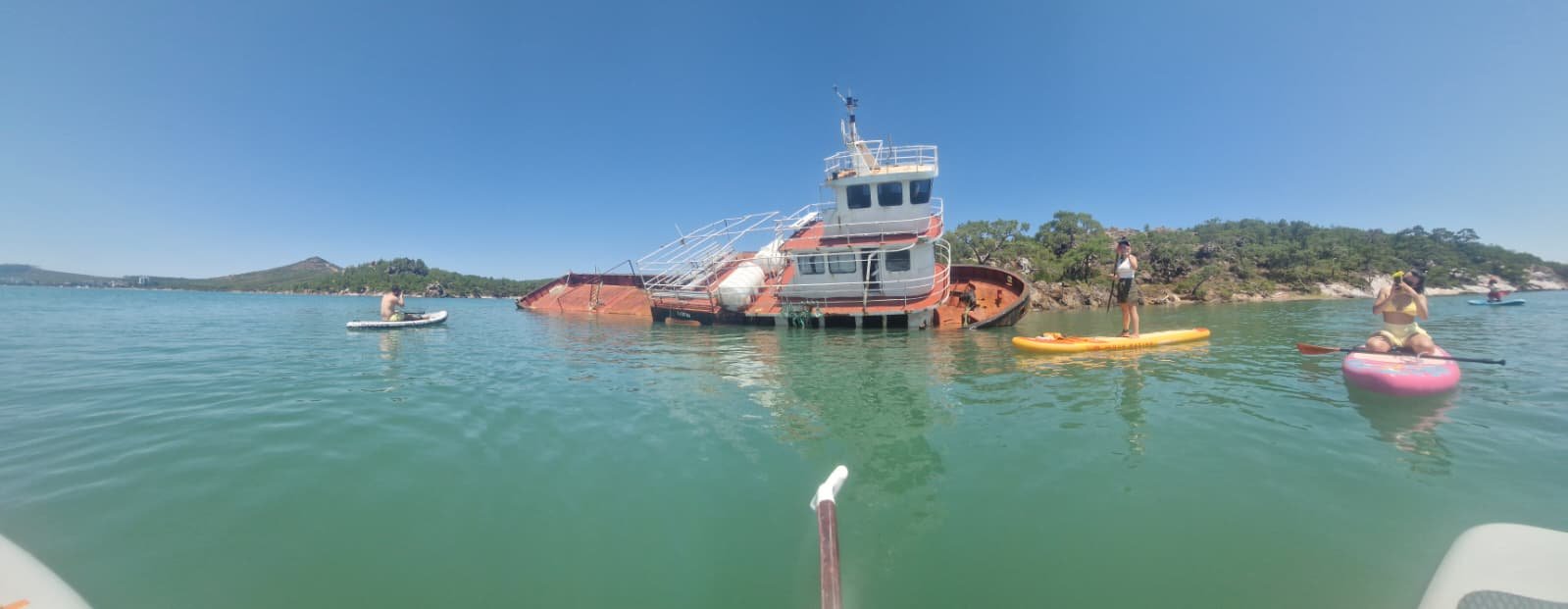
The Shipwreck Route
A short, flat paddle out to a sunken wreck and the Delikli Taş rock — no experience needed, no swell to fight.
Beginner
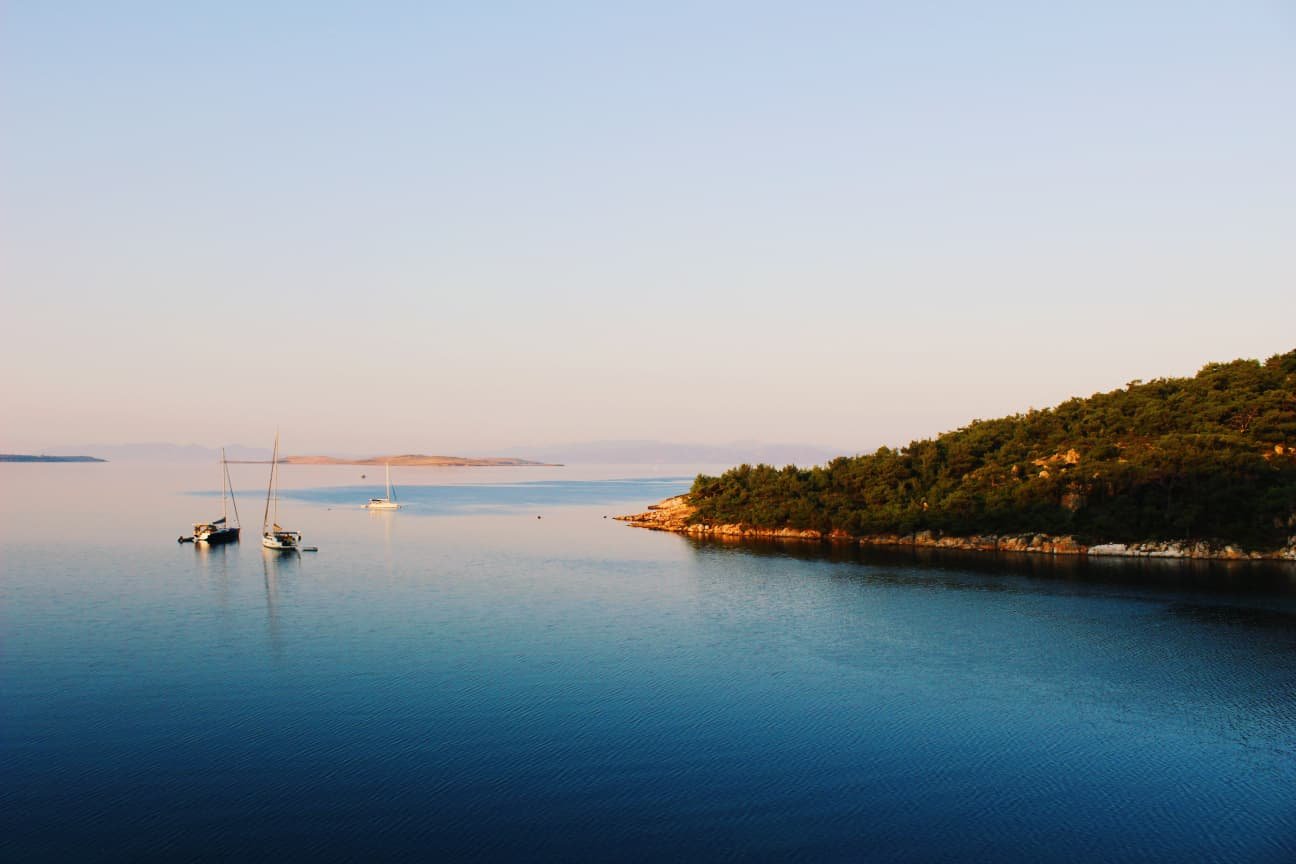
Ortunç Beach
Most visitors pay to enter through the hotel next door. There’s a free way in — and a glassy, current-free bay waiting on the other side.
Beginner–Intermediate
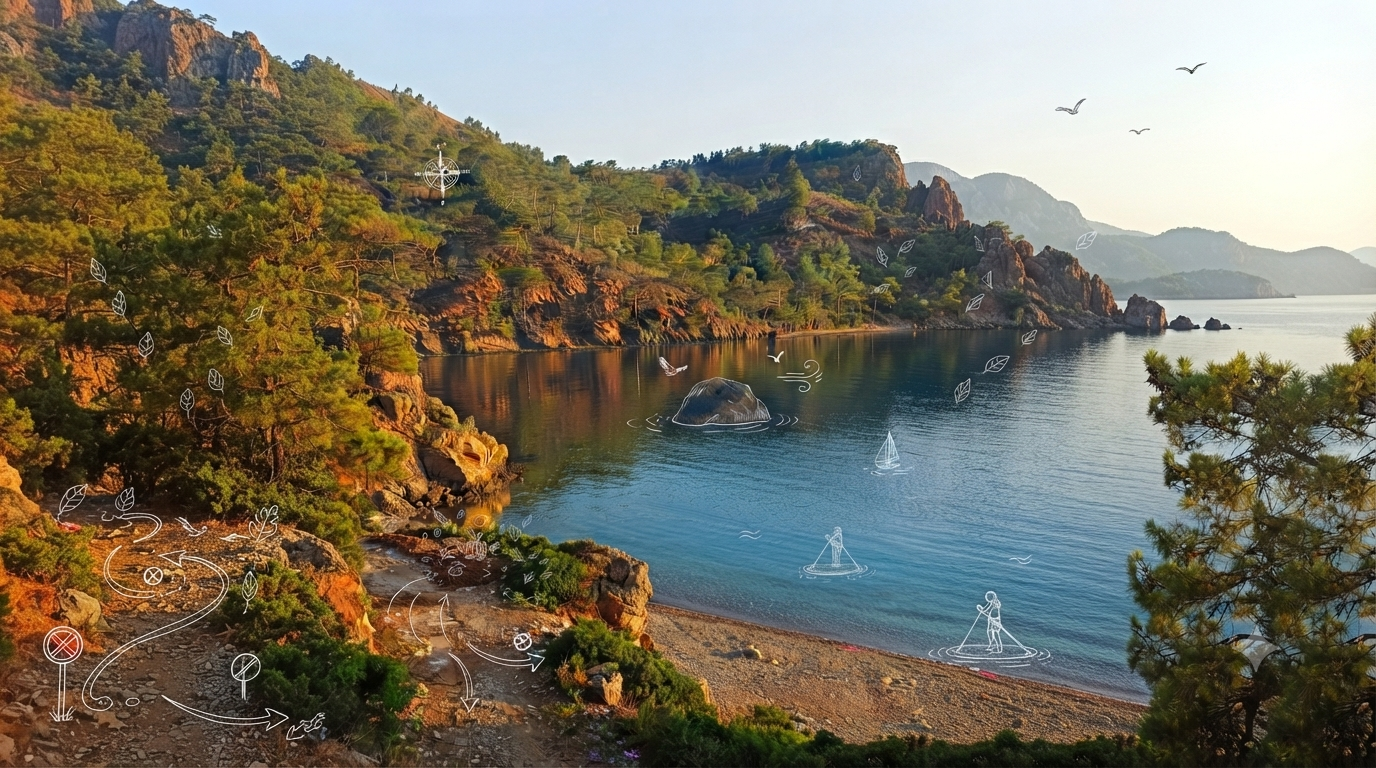
Bencik Koyu
A sheltered, glassy inlet between Marmaris and Datça with zero facilities — you bring everything, and you’ll likely have it to yourself.
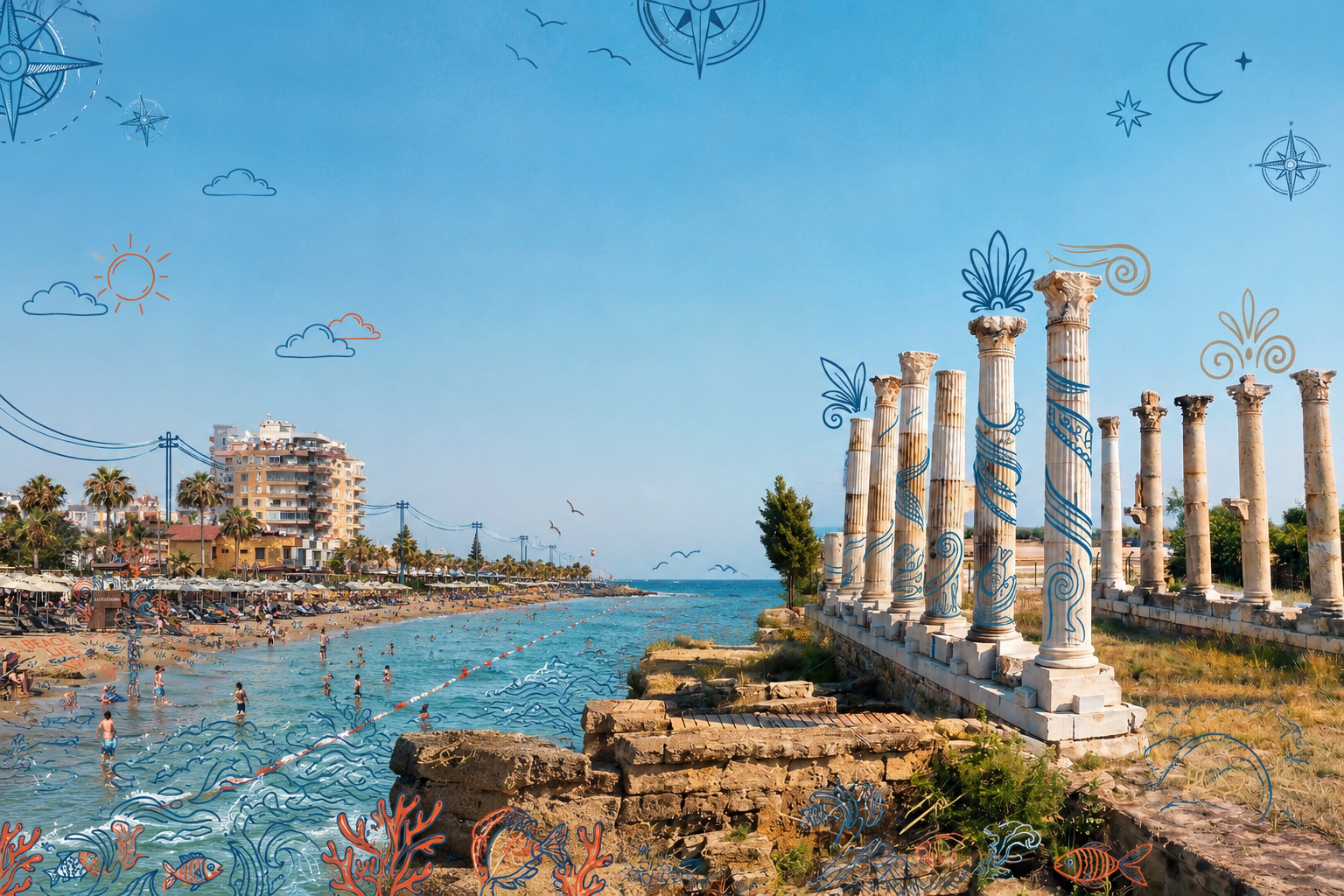
Beginner–Intermediate
Soli Pompeiopolis
Open Mediterranean water beside a 2,000-year-old Roman harbour — the only route here where the history is as much the draw as the water.
Every route on this map runs on the same clock
Four different coastlines, four completely different landscapes — and yet the timing advice in every single guide above says almost the same thing. That’s not a coincidence; it’s the meltem, the thermal wind that builds through the day across both the Aegean and Mediterranean coasts.
Glassy
Sunrise sessions. Flattest water of the day, on every route above.
Building
Wind starts to pick up. Still paddleable, but noticeably choppier.
Peak wind
The window most locals skip. Fine for wind sports, hard work for SUP.
Easing
A second, shorter calm window on some routes as the wind drops off.
Every route here has actually been paddled
No aggregated listicles, no AI-generated “top 10” filler. Each guide on this page follows the same process:
- Paddled in person — timed, photographed, and checked for wind and current at different times of day
- Access, parking, and any entry costs verified on the ground, not from a brochure
- Difficulty rated against what an actual first-timer would experience, not a marketing description
- Revisited and corrected if conditions or access change
Is stand-up paddleboarding safe for beginners on Turkey’s coast?
Most of the routes on this page were chosen specifically because they’re sheltered and beginner-friendly — flat water, little to no current, and no prior experience required. The two things that matter most anywhere in Turkey are the same as anywhere else: wear a leash and a PFD, and check the wind forecast before you go out, since afternoon thermal winds (the “meltem”) pick up fast along this coast.
Where can you paddleboard in Turkey?
The Aegean and Mediterranean coasts both offer excellent conditions, but the sheltered bays and inlets of the North and South Aegean (Ayvalık, Cunda, Datça) tend to be the calmest for beginners, while the Mediterranean coast near Mersin and Antalya offers more open-water paddling. This page tracks the specific spots we’ve personally paddled and mapped.
What’s the best time of day to paddle on this coast?
Early morning, generally between 6:00 and 9:00 AM, before the wind picks up. Every route on this page follows that same pattern — glassy water at sunrise, building chop by mid-morning. A few spots also work in the evening once the wind eases after 17:00.
Do I need to bring my own board?
It depends on the spot. Some of these routes (like Bencik Koyu) have zero facilities, so you’ll need your own inflatable board, paddle, and PFD. Others are near towns with rental options. Each individual guide states this clearly — check the specific route before you go.
This map grows slowly, on purpose — every pin is a place we’ve actually stood in the water. If you’re planning your own trip, the gear guides and beginner’s guide are a good next stop, and we post the in-between moments — training, near-misses, the real version of all this — on Instagram @sup.trail.