
SUP with Kids: How to Start Family Paddleboarding Safely
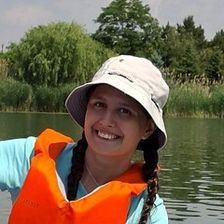
If you’ve ever watched a child step onto a paddleboard for the first time, that wide-eyed moment between wobble and wonder, you’ll understand why SUP works so well as a family sport: gentle enough for beginners, safe in calm conditions, and completely device-free. A sheltered bay like Bencik Koyu is exactly where that first session should happen.
But getting there takes preparation. The wrong board, a skipped life jacket, or a windy afternoon can turn a magical first experience into a frustrating one. This guide covers everything: gear choices for kids, how to introduce the sport step by step, and where to go in the Mediterranean for your first family session.
Is SUP Safe for Kids? What Parents Need to Know
The short answer: yes — but conditions matter enormously. SUP is inherently low-impact and low-speed, which makes it far more forgiving than surfing or windsurfing. The risks that do exist — falling into water, drifting from shore, sun exposure — are all manageable with the right approach.
Age and Readiness
There’s no universal minimum age, but most instructors agree that children around 5–6 years old have enough balance awareness and coordination to start. More important than age is temperament: a child who panics when wet, or who doesn’t respect water, needs more preparation than an adventurous seven-year-old who swims confidently.
A practical test: if your child can balance on one foot for three seconds and doesn’t panic when splashed, they’re probably ready to try paddleboarding.
The Three Non-Negotiables
- A properly fitted buoyancy aid (PFD) — CE-certified 50N buoyancy vest, not armbands or swim aids
- Calm, sheltered water only — enclosed bays, flat lakes, or calm lagoons
- A supervising adult in or near the water at all times
One more rule that surprises parents: start them kneeling, not standing. Most children’s first 20–30 minutes on a SUP should be spent kneeling at the centre of the board. It builds confidence without the fear of a big fall.
Choosing the Right Board for Kids
The instinct is to buy a smaller board for a smaller paddler. That’s partially right — but stability matters more than size. Key specs to look for:
- Width: minimum 30 inches, ideally 32–34 inches for younger children
- PSI: 14–15 PSI for good rigidity underfoot
- Full kit included: pump, leash, and backpack saves hassle and cost
- Weight capacity: check it covers the child plus any adult who may need to assist
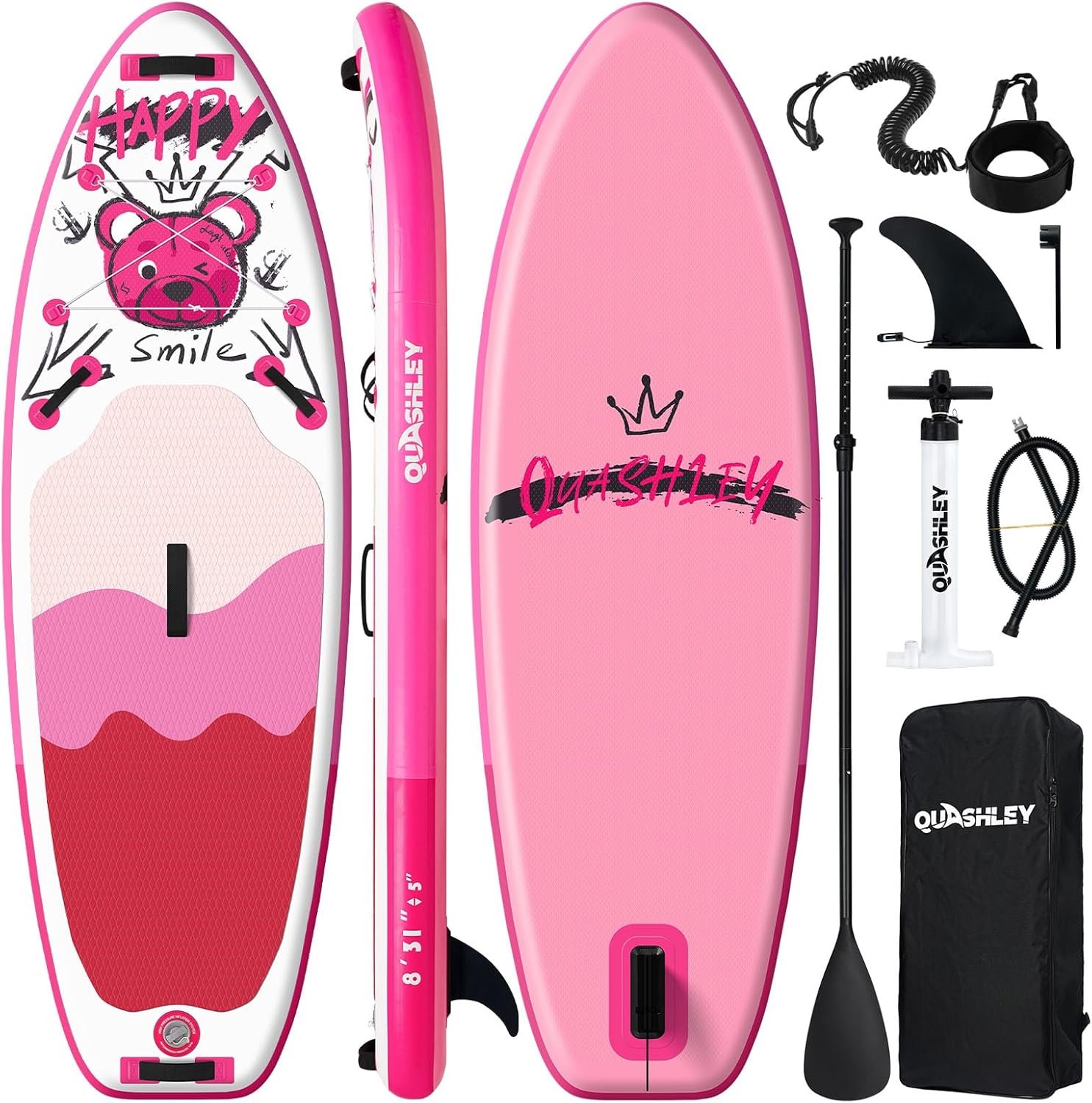
A purpose-built kids’ paddleboard with a complete kit — adjustable paddle, pump, leash, and backpack — so you’re ready to launch from day one. The anti-slip EVA deck gives younger paddlers a forgiving surface, and the compact size is genuinely manageable for smaller riders. One of the few boards explicitly designed for children rather than simply labelled “youth.”
- Purpose-designed for children
- Complete kit, nothing else to buy
- Anti-slip deck reduces fall risk
- Lightweight, easy to carry
- Weight capacity not specified
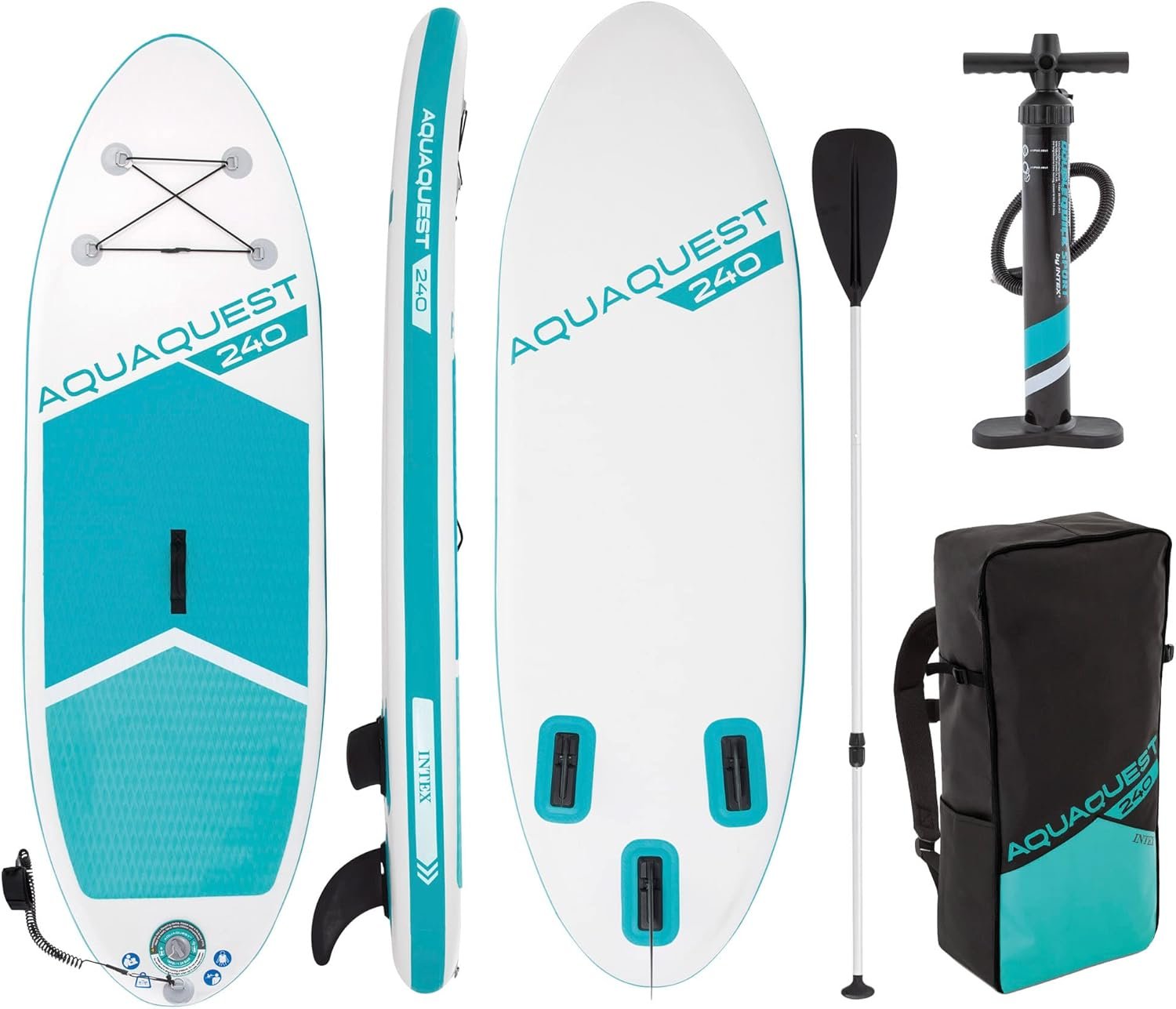
Intex is one of the most trusted names in inflatable water equipment, and the Aqua Quest 240 is their dedicated youth board. At 244 × 76cm with a clear 90kg weight limit and ages 8+ rating, it works for older children and doubles as a board parents can use for quick rescues. Full kit included. The Intex name provides reassurance when buying in an unfamiliar category.
- Trusted brand, long track record
- Clear age (8+) and weight (max 90kg) ratings
- 76cm width for excellent stability
- Full kit included
- Best for 8+ rather than younger children
- Larger size can be unwieldy for smaller kids
Quick Comparison
| Quashley Kids | Intex Aqua Quest 240 | |
|---|---|---|
| Age Range | ~6–12 years | 8+ years |
| Max Weight | Not specified | 90 kg |
| Board Size | Compact kids size | 244 × 76 cm |
| Kit Included | Paddle, pump, leash, backpack | Paddle, pump, backpack, leash |
| Best For | Younger, lighter children | Older kids, family use |
Kids’ Buoyancy Aids: The Most Important Purchase
The buoyancy aid matters more than the board. A child who falls while wearing a properly fitted 50N vest will float, stay calm, and wait to be collected. A child without one — even a confident swimmer — is a genuine risk in open water.
What to look for:
- CE certified to EN ISO 12402, 50N minimum for sheltered water
- Neoprene or foam construction — flexible enough to paddle in, snug enough not to ride up
- Dual or triple adjustable safety straps
- Crotch strap or leg strap to prevent the vest riding up if submerged
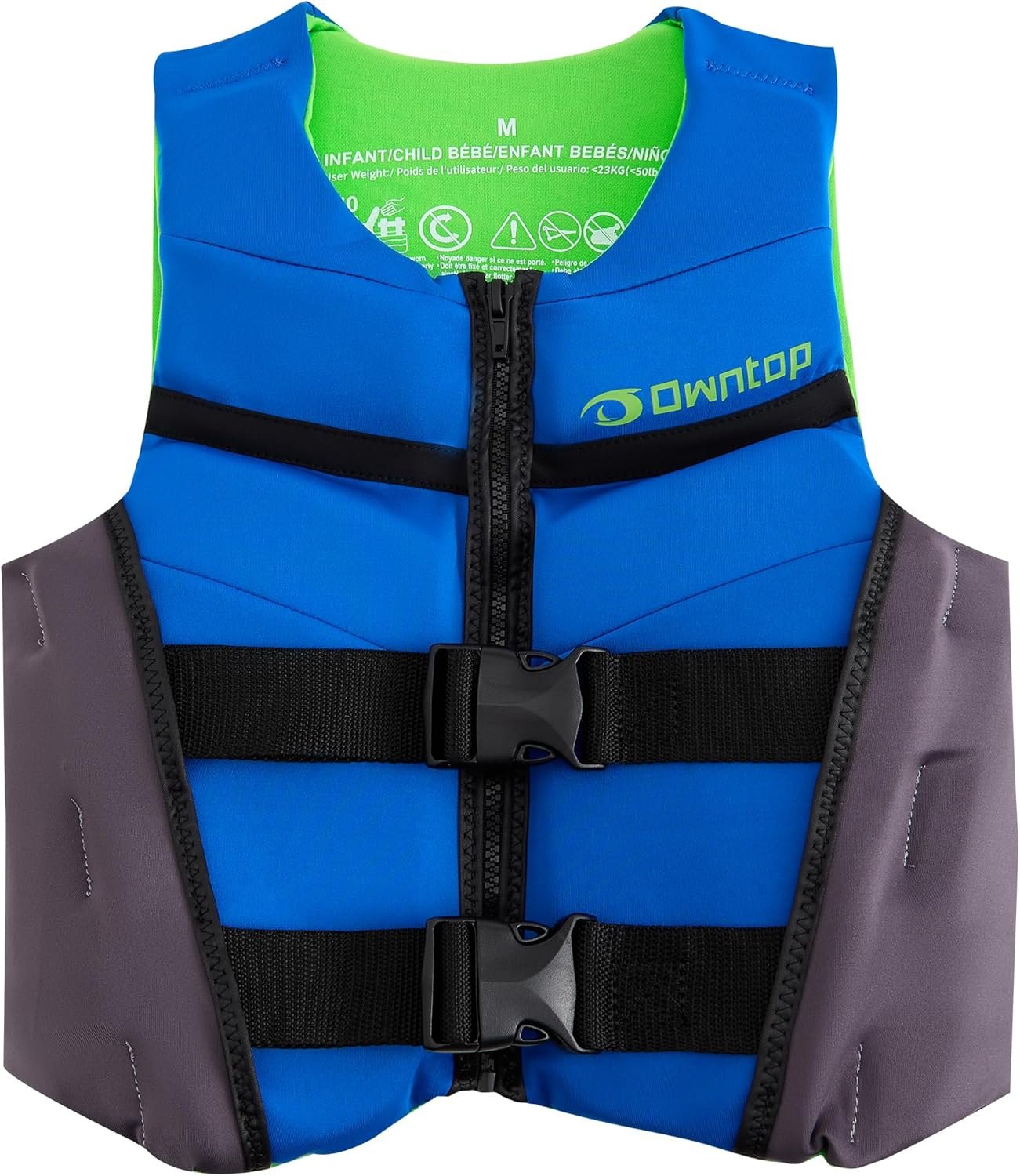
Specifically listed for paddleboarding and kayaking, which sets it apart from pool-focused swim vests. The neoprene construction provides a snug, flexible fit that stays in place during active paddling, and dual adjustable straps allow a secure fit as children grow. Lighter and more breathable than traditional foam vests — important in warm Mediterranean conditions.
- Explicitly rated for paddleboarding
- Neoprene — flexible and stays put
- Dual adjustable safety straps
- Safer chemicals certified
- Neoprene can feel warm in very hot conditions
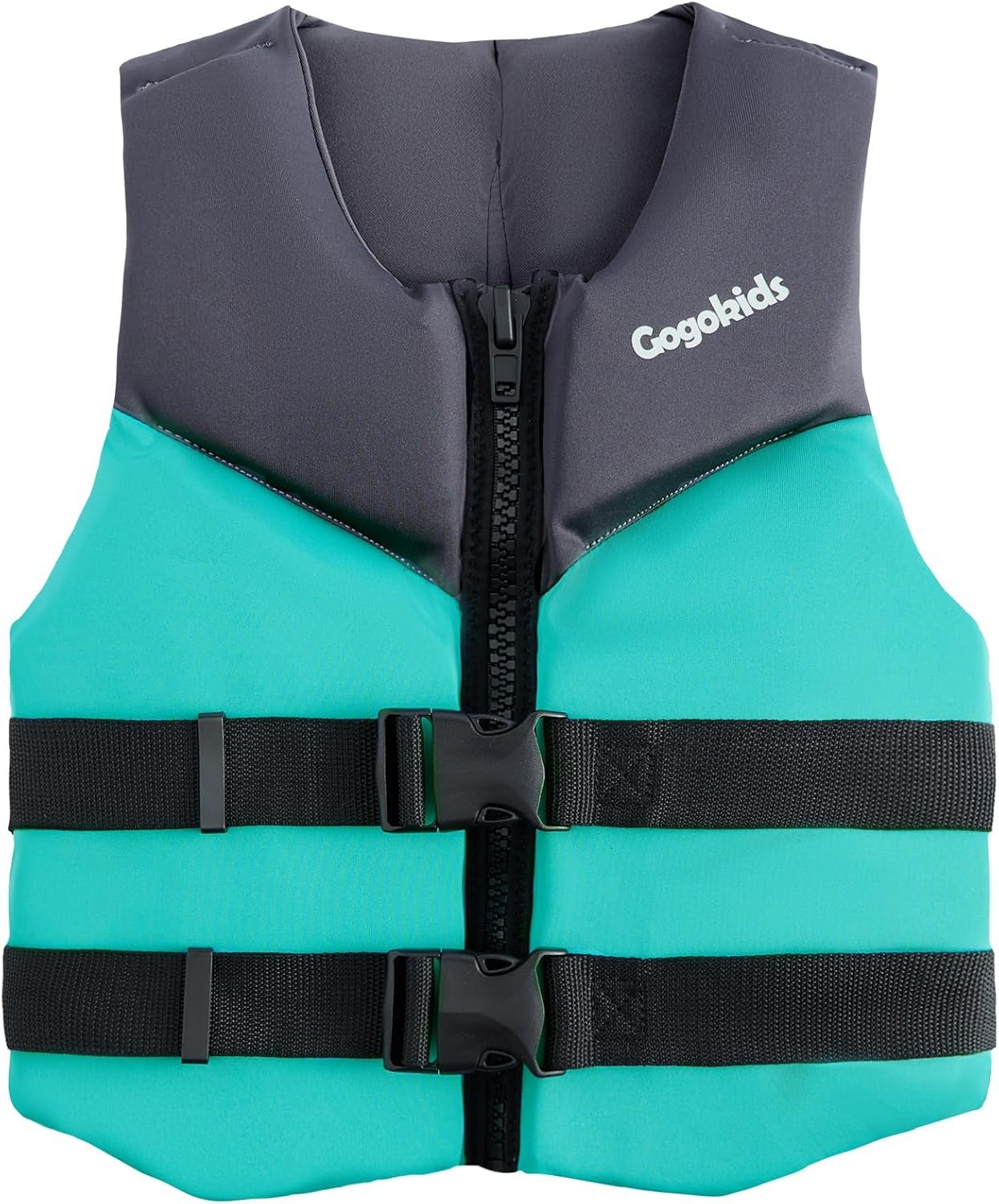
The 30–50kg weight range covers most primary school-aged children, and the paddle boarding rating confirms it’s designed for active watersports rather than poolside use. A reassuring choice for parents wanting proven gear before a first family trip.
- Paddle boarding rated
- Clear weight (30–50kg) and age (6–11) range
- Safer chemicals certified
- Starts at 30kg — not for lighter children
- Older children may need next size by age 12
Getting the Paddle Right
Adult SUP paddles run 68–86 inches — far too long for a child. An oversized paddle forces children to lean and twist in ways that make balance harder and lead quickly to frustration. A properly sized kids’ paddle should reach roughly 8–10 inches above the child’s head when standing.
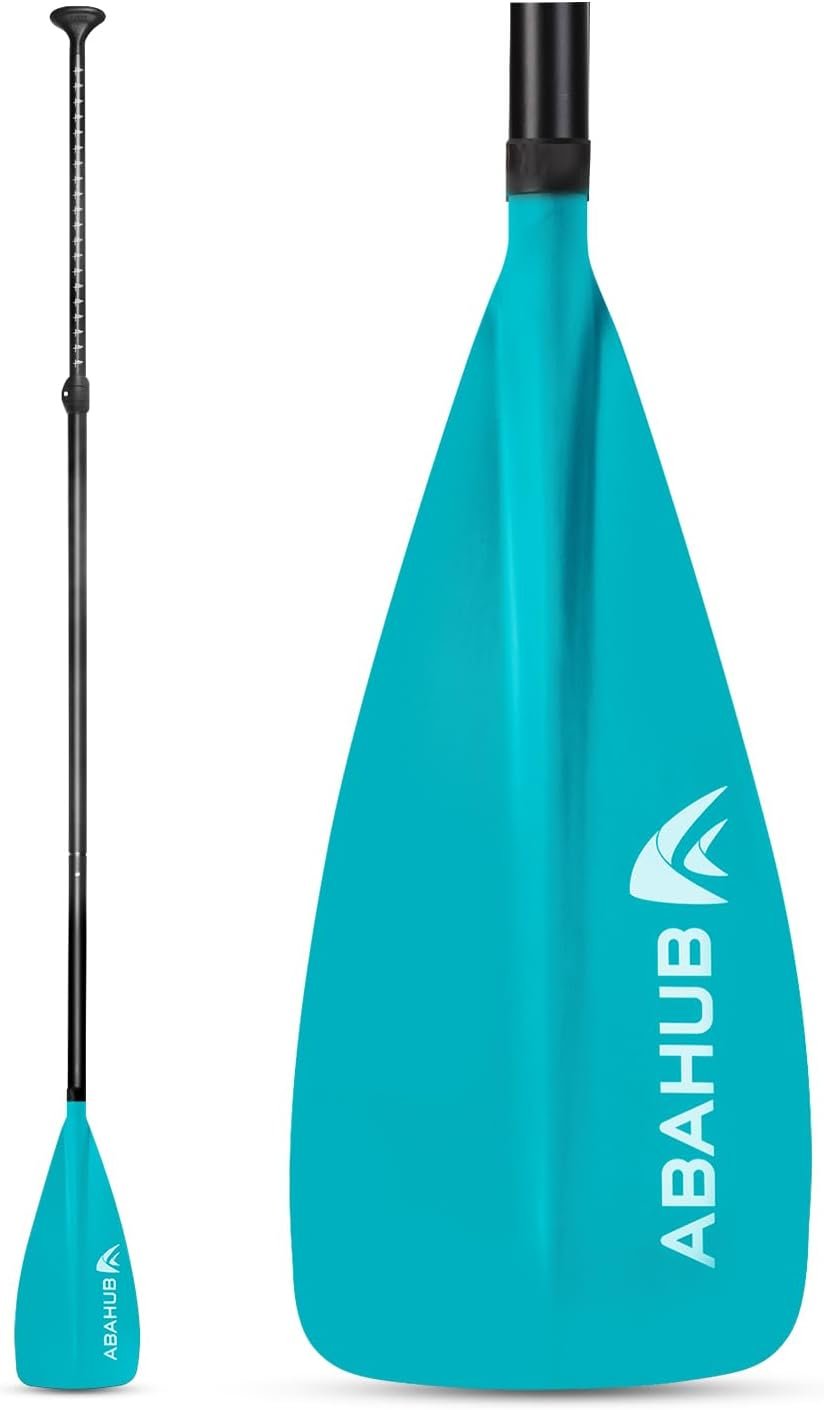
Adjustable from 55 to 70 inches, covering the range from a six-year-old to a young teenager. Three-piece breakdown fits easily into any board bag, the paddle floats — essential for children who drop it frequently — and the teal colourway is clearly designed with younger paddlers in mind. Abahub paddles appear across our other gear guides, a brand that consistently delivers at this price point.
- 55–70 inch range covers primary age to early teens
- Floating — won’t sink if dropped
- Three-piece for easy travel
- Purpose-designed for children
- Teal only, no colour choice
How to Introduce SUP to Children: Step by Step
The biggest mistake parents make is rushing the standing phase. A slower, stage-based approach produces far better results than going straight to standing on day one.
On the Beach First
Lay the board flat on sand or grass. Let children kneel, stand, and balance on it while stationary. Children learn where the centre is and what “balanced” feels like without moving water beneath them.
Kneeling in Shallow Water
Walk the board into ankle-to-knee-depth water. Have the child kneel at the centre carry handle and get used to the board moving. Five to ten minutes here is worth an hour of fighting the urge to stand.
First Strokes — Still Kneeling
Introduce the forward stroke while kneeling: blade in, pull to the hip, exit, switch sides. Technique doesn’t matter yet. Most children naturally start experimenting with standing after 20–30 minutes.
Standing Up
One foot at a time where their knees were — parallel, shoulder-width, centred over the carry handle. Eyes on the horizon, not the board. Key coaching cue: “Look where you want to go, not at your feet.”
On falling: Teach children to fall away from the board into the water, not onto it. Practise this as a game — “jump off the side” — so when an unexpected fall happens, it’s already familiar.
Best Mediterranean Spots for First Family SUP Sessions
The Turkish Aegean offers some of Europe’s most forgiving conditions for family paddleboarding — sheltered bays, crystal-clear water, and warm temperatures from May to October. The locations below are chosen specifically for calm conditions and easy shore access.
Bencik Koyu, Hisarönü Bay
One of the most sheltered natural anchorages on the Turkish Aegean. The bay is almost entirely enclosed, creating flat, glassy conditions that are genuinely beginner-proof. No motorboats, no wakes, and the water is shallow enough along the shoreline for parents to wade alongside younger children. Full Bencik Koyu guide →
Ideal for: Ages 5 and up. Kneeling sessions, first standing attempts.
Selimiye, Bozburun Peninsula
A sheltered harbour village with flat, protected water inside the bay. Selimiye has local SUP rental operators accustomed to family groups. The village makes for a lovely afternoon after a morning on the water.
Ideal for: Ages 7 and up. Active families wanting a full day around the water.
Timing Rule
Across all Mediterranean locations: paddle before 10:00 AM. Thermal winds pick up as the day heats up, and conditions that are glassy at 8 AM can be choppy by noon. For children’s first sessions, early morning isn’t just preferable — it’s essential.
Common Mistakes Parents Make
Frequently Asked Questions
What age can children start paddleboarding?
Most children are ready around age 5–6, though individual temperament matters more than age. A calm, water-confident 5-year-old will often learn faster than an anxious 8-year-old. Always start in calm, enclosed water with close adult supervision.
Do children need their own paddleboard?
Not initially. Many families start with one adult board (wide, stable beginner type) and take turns, or have a child kneel in front of a parent. A dedicated kids’ board becomes worthwhile once the child is paddling independently and regularly.
What’s the difference between a buoyancy aid and a life jacket for kids?
A life jacket (100N+) will right an unconscious person face-up and is designed for open-water emergencies. A buoyancy aid (50N) supports a conscious swimmer in calm, sheltered water. For supervised family SUP in sheltered bays, a CE-certified 50N buoyancy aid is appropriate.
Can I use a family-sized SUP board with my child?
Yes. Wide, stable adult boards (32 inches+) work well with a child kneeling or standing in front of a parent. It’s a great way to introduce the sport before investing in dedicated children’s equipment.
Is SUP safe in the Mediterranean in summer?
Yes, in sheltered bays during morning hours. The key risks are afternoon thermal winds (paddle before 10 AM), UV exposure (SPF 50, hat, rash vest), and dehydration. The Turkish Aegean coast has dozens of perfectly sheltered spots that stay calm all morning.
The Family Session You’ll Come Back For
There’s a reason family SUP is growing faster than almost any other water activity in Europe. It’s accessible, low-cost once you have the gear, and produces the kind of shared experience that children actually remember. No screens, no queues, no noise — just water, light, and the quiet satisfaction of doing something together that requires actual presence.
The Turkish Aegean is one of the best places on earth to start. Calm water, warm temperatures from May to October, and a coastline full of sheltered bays that feel designed for exactly this. Get the gear right, start early, stay close to shore — and the rest takes care of itself.
Gear Mentioned in This Article
- Quashley Kids Inflatable Paddle Board — Complete kids’ SUP kit
- Intex Aqua Quest 240 Youth SUP — Ages 8+, max 90kg, full kit
- Owntop Junior Swim Vest — Kids’ buoyancy aid, neoprene, paddleboarding rated
- Gogokids Junior Swim Vest — 30–50kg, ages 6–11
- Abahub Kids SUP Paddle — Adjustable 55–70 inch, floating, 3-piece