
Aldi Paddleboard 2026: Is It Worth Buying?

The Aldi paddleboard is worth buying if you are a lighter paddler who will use it on calm, sheltered water a handful of times each summer. At £129.99 with a paddle and pump in the box, it is one of the cheapest ways into the sport in the UK. It is the wrong first board if your weight sits close to its listed maximum load, if you want to paddle on the sea when the wind picks up, or if you don’t trust your balance yet.
That last point is the one most reviews skip. I’m a certified SUP coach and I’ve paddled a range of boards, including the relatively thin boards we had in Datça on Turkey’s Aegean coast. Standing up on them was much harder, especially in choppy water. Thickness and width are what separate a board that teaches you from one that tips you off, and they are exactly the numbers supermarket listings tend to leave out.
To be clear about where this verdict comes from: I haven’t paddled the Aldi or the Lidl board itself. This is built on their published specs and on what boards with similar specs do on the water.
What is the Aldi paddleboard and how much does it cost?
Aldi sells an inflatable paddleboard as a summer Specialbuy: a limited run, in stores, until stock is gone. In 2026 it arrived at £129.99 as part of the summer collection, and shopper videos from UK stores show it on the shelf at that price.
Specialbuy pages come down once the stock sells out, and the model changes from year to year. Here is what we could confirm for the 2026 board, and what we couldn’t.
The two blanks are the ones that matter most. If you are standing in front of the box in store, find the width and thickness before anything else. The next section explains what to look for.
Is the Aldi paddleboard good for beginners?
It can be, if the numbers on the box line up. Length is the spec printed biggest and it matters least to a beginner. Three other things decide whether your first session is fun or a long swim.
Width: aim for 32 to 34 inches
Width is your stability. For a first board I recommend 32 inches (about 81 cm) or more. Below that, every small wobble turns into a correction you don’t yet know how to make.
Thickness: 6 inches is the norm
Most all-round inflatables are 6 inches (15 cm) thick. A thinner board carries less volume, sits lower in the water and flexes more underfoot. On flat water you may not notice. In chop, the board moves under you while you’re still trying to find your feet.
We had relatively thinner boards in Datça, and standing up on them was much harder, especially in choppy water. If someone tells me their balance isn’t great, a thin board isn’t what I’d put them on first.
Max load is not your weight limit
A listed maximum load is the point where the board still floats you, not the point where it paddles well. Leave a generous margin, and add your bag, a dog or a child on the nose if you plan to carry them. Our 45-second board size check on the homepage gives you a volume and width range for your weight.
Pressure: rated PSI or nothing
An inflatable only delivers its stiffness at full rated pressure. A board pumped to 10 PSI behaves like a much smaller, softer one, and basic hand pumps make those last few PSI hard work. If you buy a budget board, budget for a decent pump too. Our SUP pump guide covers which one is worth it.
Aldi vs Lidl Crivit: which supermarket paddleboard is better?
Lidl sells its own inflatable board under the Crivit brand. In June 2026, Lidl’s UK listing put it at £99.99, or £89.99 with Lidl Plus, at 305 x 79 x 12 cm inflated. Lidl’s Irish listing for a board with the same dimensions gives a 100 kg maximum load.
| Spec | Aldi (2026) | Lidl Crivit (UK, 2026) |
|---|---|---|
| Price | £129.99 | £99.99 (£89.99 Lidl Plus) |
| Length | 305 cm | 305 cm |
| Width | Not published | 79 cm (31″) |
| Thickness | Not published | 12 cm (4.75″) |
| Max load | 120 kg | 100 kg |
| Where | In store, summer Specialbuy | In store, early June |
My read: Lidl’s board is cheaper and its numbers are public, which I respect. But 79 cm is under the 32-inch width I’d want for a nervous beginner, and 12 cm is a full 3 cm thinner than the 15 cm norm. That is the kind of board I’m describing from Datça. Aldi’s higher listed load suggests more volume, but without a published width and thickness I can’t confirm it.
One thing to watch: “the Lidl paddleboard” is not one product. A German boating magazine tested a 315 x 84 x 15 cm Crivit board and rated its stability highly. That is a wider, thicker board than the one on Lidl’s UK shelves. Read the dimensions on the box, not the brand name.
Who should skip a supermarket paddleboard?
A cheap board is a good buy for some people and a false start for others. Here’s how I’d split it.
Skip it if:
- You don’t trust your balance yet. A thin, narrow board makes standing up harder exactly when you need it to be easy.
- Your weight is close to the listed maximum load, or you want to paddle with a passenger.
- You plan to paddle on open sea, cover real distance, or go out when the wind has picked up.
- You want a board that will last several seasons. Specialbuys are limited runs, so spare parts and support are harder to find later.
It makes sense if:
- You’re a lighter paddler who wants a few calm-day sessions each summer.
- You’ll use it on lakes, sheltered beaches and flat mornings, close to shore.
- You want kids to play on it in shallow water under close supervision. Our family paddleboarding guide covers the rules.
What should you check before buying any budget paddleboard?
Whether it’s Aldi, Lidl or a £150 listing online, these six checks take two minutes and tell you more than any star rating.
The single biggest stability factor for a first board.
Thinner boards flex more and sit lower. Fine for light paddlers on flat water, hard work in chop.
Add kit, a dog or a child. If the total gets close to the limit, size up.
Look for a pump with a gauge. A soft board is a wobbly board.
Ankle and calf leashes suit calm sea and lakes. On rivers and moving tidal water, the RNLI advises a quick-release waist leash.
Check the warranty and whether a replacement fin or valve is easy to find before the shelf empties.
What are the better alternatives at a similar price?
If Aldi’s board has sold out, or the box fails the checklist, these three are sold year-round on Amazon UK with normal returns. I haven’t paddled these exact models either. They’re here because their listed width sits in the beginner range and they come as complete kits. All three also appear in our beginner board guide.
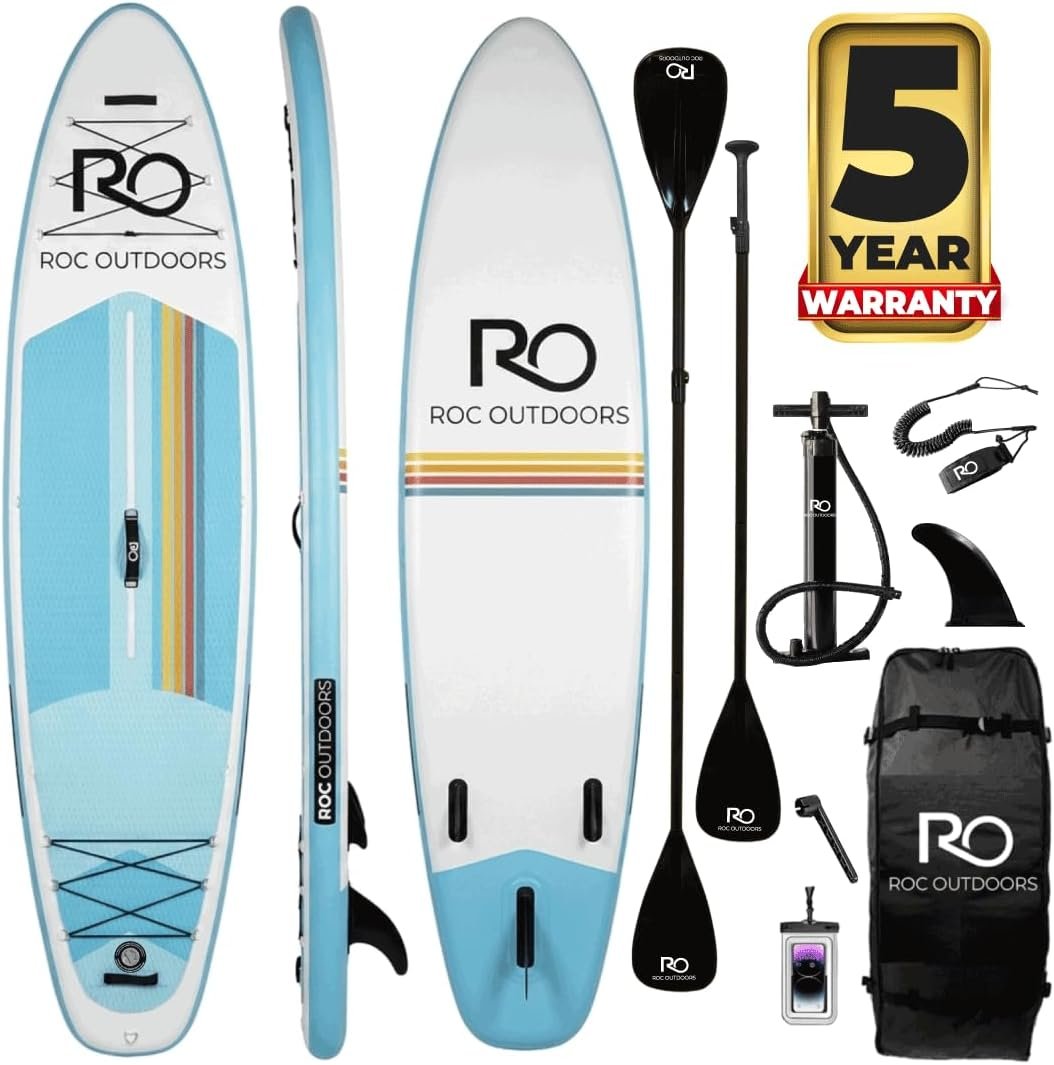
Roc Inflatable SUP 10’6″
The safest bet on this shortlist. A 32-inch deck puts it inside the beginner width range, and it comes with everything you need to get on the water, so there’s nothing extra to buy on day one.
- Beginner-range width
- Complete kit in the box
- Costs more than the supermarket boards
- Aluminium paddle is on the heavy side
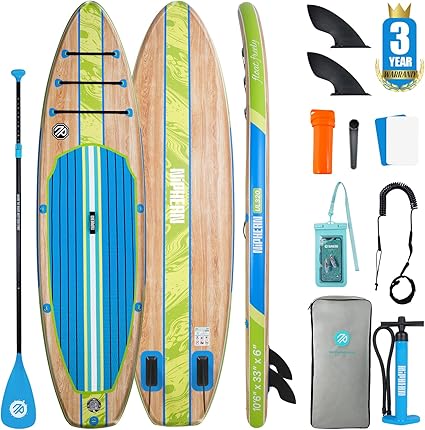
Niphean Inflatable SUP 10’6″
Closer to supermarket money while keeping a 32-inch width and drop-stitch construction. The pump is the weak point, so plan to upgrade it if you paddle often.
- Beginner-range width
- Drop-stitch build, full kit
- Basic pump
- Less brand recognition than Roc
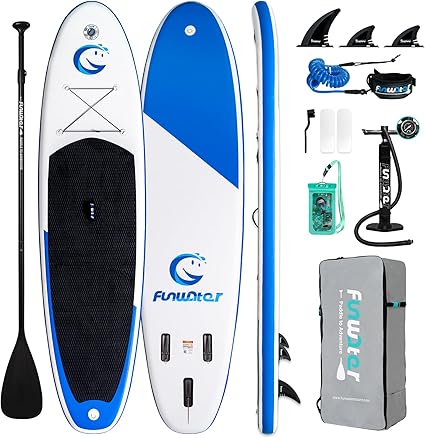
FunWater Inflatable SUP 10’6″
The most direct swap for a supermarket board: similar money, but listed at 33 inches wide and 6 inches thick. Treat it as an occasional-use board rather than one to grow into.
- Width and thickness in the beginner range on paper
- Low entry cost, full kit
- You may outgrow it within a season
- Not for heavier paddlers or chop
Taking a budget board on holiday to Turkey?
If you’re thinking of packing a cheap inflatable for a summer holiday on the Aegean, know the coast first. The water is warm and the mornings are glassy, but a thermal wind builds through the day, usually from around early afternoon in summer. A light, thin board sits high and catches every gust, so the return leg is where it gets hard.
Paddle early, head into the wind first so it brings you home, and stay close to the shore. Before you pay for a board bag on the plane, read our guide on whether to fly with your paddleboard or rent one in Turkey.
What safety kit do you need with a budget paddleboard?
A cheaper board doesn’t change the safety basics. If anything, it makes them more important. The RNLI’s lifeguards responded to 1,290 paddleboarding incidents in 2022, up from 247 in 2018, and the charity says a significant number involved people blown or swept out to sea. Its paddleboarding safety advice comes down to four things:
Every session, not just on the sea. Our SUP life jacket guide covers which ones you’ll actually keep wearing.
On you, not in a dry bag strapped to the board.
Ankle or calf on calm water, quick-release waist leash on rivers and moving tidal water.
Wind blowing from land to sea makes the water look calm while it pushes you out.
One coaching habit worth building: if the wind is carrying you away from shore, don’t stay standing. Drop to your knees or lie flat and paddle with your arms. Your body stops acting as a sail and you make far more progress. I hold a lifeguard certification, and this is the first thing I’d want every new paddler to know.
Aldi paddleboard FAQs
When does Aldi sell paddleboards?
Can two people use the Aldi paddleboard?
Is a thinner paddleboard harder to stand on?
Can I use the Aldi paddleboard on the sea?
Is the Aldi or the Lidl paddleboard better?
A cheap board that gets you on the water is better than an expensive one in the cupboard. Just check the width and thickness first, because those two numbers decide whether you come back for a second session.