
Winter Paddleboarding: What to Wear and How to Stay Safe in Cold Water

Most winter paddleboarding advice is recycled surf advice. Buy a 5/4, it says, and get on with it. That advice is written for people who spend the session in the water. You spend it on the water: mostly dry, standing up, fully exposed to wind, and occasionally, without warning, completely submerged. Those are different thermal problems and they need different kit.
This guide covers what actually happens to your body in cold water, how cold British and Northern European water really gets (the answer is not what most people assume), what to wear from head to toe, what changes about the board itself, and the part almost nobody writes about: the thirty minutes after you get off the water, which is when a lot of people feel worst.
The RNLI’s definition of cold water. Below this, cold water shock is possible.
How much faster water conducts heat away from you than air at the same temperature.
Share of RNLI paddleboard callouts caused by offshore wind or being swept out, not by cold.
In this guide
- What cold water actually does to you
- How cold is the water, and when is it coldest?
- Drysuit or wetsuit for paddleboarding?
- What to wear, head to toe
- What changes about the board in winter
- How to plan a winter session
- What to do if you fall in
- Getting warm afterwards
- The mistakes that actually matter
- Winter kit checklist
- FAQ
What cold water actually does to you
Cold water does not kill by making you cold. It kills in three overlapping stages, and the first one arrives long before hypothermia is anywhere near the picture. Understanding the order of events is what lets you make sensible kit decisions instead of anxious ones.
Seconds to 2 minutes
Cold water shock
An involuntary gasp, then hyperventilation the RNLI describes as breathing rates increasing “as much as tenfold.” You cannot consciously stop it. If your face is underwater when the gasp happens, you inhale water, and the RNLI notes it takes only half a pint in the lungs for a grown adult to start drowning. This phase, not hypothermia, is what drowns most people. It passes in under a minute if your airway stays clear.
Roughly 2 to 30 minutes
Cold incapacitation
Blood retreats from your limbs to protect your core. Grip goes first, then arms and legs. You do not feel it coming. You simply find that you cannot pull yourself back onto the board or hold a paddle. Cold water researcher Gordon Giesbrecht’s published work puts this window at two to thirty minutes, and in one filmed demonstration he was fully incapacitated within six.
30 minutes onwards
Hypothermia
Core temperature drops far enough to cloud judgement and eventually cause unconsciousness. Even in ice water this typically takes around an hour. It is the stage everybody worries about and the one least likely to get you, because the first two phases have a much shorter fuse.
From my lifeguard training
During my lifeguard qualification I spent fifteen or twenty minutes in cold water without a wetsuit. Some of the others on the course had one on; I did not. And while I was in there, I genuinely did not feel cold. The adrenaline of the training, the concentration on the drill, the fact that I was working hard: all of it meant the water simply did not register as a problem.
Then I got out. Within a few minutes I was shivering hard and the skin on my hands and forearms had changed colour. Nothing about how I felt in the water had predicted that. My body had been dealing with it the whole time and had not bothered to tell me.
That is the single most useful thing I know about cold water: how cold you feel is not a measurement of anything. It is the least reliable instrument you own.
The “1-10-1 rule” is more popular than it is accurate
You will see 1-10-1 quoted everywhere: one minute to control your breathing, ten minutes of meaningful movement, one hour before unconsciousness. It is a useful memory hook and it comes from real research. But the National Center for Cold Water Safety argues it has become actively misleading, and their objection is worth understanding rather than ignoring.
The problem
“You have one minute” implies breathing is controllable during cold shock. It is not. “Ten minutes of movement” implies a clean cut-off, and NCCWS point out that Giesbrecht’s own published figures give two to thirty minutes for incapacitation. Their summary: with each passing minute, you are becoming weaker and weaker.
The useful version
Treat the numbers as a decaying curve, not a countdown with checkpoints. Your capability starts falling the second you go in and never stops. Every plan you make should assume you get one attempt at self-rescue, quite soon, and that it may not work.
Cold water reality
NCCWS are blunt about the corollary: the idea that you can safely paddle cold water simply by wearing a buoyancy aid is dangerous and inaccurate. A PFD keeps your airway clear through phase one, which is genuinely lifesaving, but it does nothing for phase two or three. Flotation and thermal protection are two separate jobs and you need both.
How cold is the water, and when is it coldest?
Here is the fact that reorganises everything: the coldest water of the year is not in winter. Water has enormous thermal mass, so it lags air temperature by roughly two months. British and Irish sea temperatures bottom out in late February and March, not December, and they are still near that floor in April, when the sun is out, the air is mild, and everybody has stopped taking it seriously.
Average UK sea temperature by month
Regional spread matters as much as the month. The Gulf Stream keeps the south-west mildest, with Newquay holding around 10 °C in January, while the North Sea coast is the coldest water in England: Sunderland drops to about 6.8 °C in February and March, and Aberdeen sits near 7 °C. Inland reservoirs and lakes run colder still than the sea beside them, because they have no warm current feeding them.
Put the RNLI’s threshold next to that chart and the conclusion is uncomfortable but simple. Anything below 15 °C counts as cold water, and UK water sits below 15 °C for roughly two-thirds of the year. The average around Britain and Ireland is about 12 °C. Winter paddling is not a special category with its own rules. It is most of the year, and summer is the exception.
Why the “120 rule” does not work here
American paddling forums push the 120 rule: add air temperature to water temperature in Fahrenheit, and if the total clears 120 you can dress for the air. It is widely criticised even in the US, because 80 °F air over 40 °F water passes the test and will still put you in hospital. In the UK it is simply unreachable. A generous winter day of 8 °C air over 8 °C water is 46 °F plus 46 °F, about 93 combined. Even a bright spring afternoon of 15 °C air over 9 °C water only reaches 107. You never clear the bar. Applied honestly on this side of the Atlantic, the rule says exactly one thing: always dress for immersion.
Drysuit or wetsuit for paddleboarding?
This is the decision everything else hangs off, and it is where most guides go wrong by assuming a paddleboarder is a surfer with a longer board.
A wetsuit works by letting a thin film of water in and holding it against your skin until your body heats it. That is an excellent design for someone submerged continuously: a surfer, a swimmer, a diver. It is a poor design for someone mostly out of the water in wind. Two failure modes follow, and both are things paddlers report constantly rather than things gear marketing mentions:
A drysuit inverts the logic. It keeps water out entirely with latex or neoprene seals at neck and wrists and integrated socks, and the warmth comes from whatever you layer underneath. That means you can tune insulation to the day, dump heat by adjusting layers rather than by flushing water, and, crucially, come out of a swim dry. UK paddlesport retailers make the same argument: touring paddleboarders spend more time out of the water than in it, which is precisely what a wetsuit is not designed for.
What I learned at a watersports centre
Training on the water at a watersports centre, I was in and around the water for hours at a time, day after day. The instructors were firm about wetsuits, and at first that seemed like overkill. On a warm afternoon you could get in, mess about for ten minutes and get out again perfectly comfortably with nothing on at all.
The reason they insisted was not the temperature. It was the duration, and the distance. Sessions ran long, you ended up a long way from the beach, and if something went wrong out there you were not getting back quickly. Ten minutes near the shore and two hours half a kilometre out are not the same activity, even in identical water.
Choose your thermal protection for how long you will be exposed and how far you will be from land, not for how the water feels when you first put a foot in.
The line that matters
A drysuit does not keep you warm. It only keeps you dry. Nearly every drysuit disappointment I have come across traces back to someone treating it as a warm garment and wearing a t-shirt under it. Your base layers are the insulation. The suit is only the shell.
| Drysuit | Winter wetsuit (5/4 hooded) | |
|---|---|---|
| Best for | Touring, distance, flat water, anyone mostly staying dry | Surf SUP, downwind, whitewater, repeated full immersion |
| After a swim | You are dry. Keep paddling. | You are wet in the wind. Head in. |
| Temperature range | Wide, because you change base layers | Narrow. One thickness, one answer. |
| Overheating risk | Low if you layer sensibly | High when working hard |
| Failure mode | An unnoticed tear floods it and it gets heavy | Flushing at neck, wrists and ankles as it ages |
| Comfort | Latex neck seal takes acclimatising to | Restrictive on the shoulders, slower to get into |
| Cost | Higher up front, replaces a wetsuit, lasts years | Cheaper entry, faster to wear out |
| Getting changed | Goes on over dry clothes at the car | Wrestling wet neoprene in a car park in February |
What about a semi-dry suit?
Semi-dry suits substitute neoprene seals for latex. They are noticeably more comfortable to wear all day and do not feel like a hand around your throat the first ten times. The trade-off is real: they will let water in during a proper dunking. If your paddling is flat, close to shore and you are realistically not going in often, a semi-dry is a reasonable choice. If you are going out alone in February, get latex at the neck.
My recommendation, and where to buy it
For most people paddling below 12 °C water, the answer is a breathable drysuit with latex neck and wrist seals and fabric socks, worn over merino or synthetic base layers. Make it your one significant winter purchase and spend less everywhere else.
Honest note: do not buy a drysuit on Amazon
I looked, and there is almost nothing there worth having. Amazon UK carries a handful of little-known listings, plus diving drysuits that are the wrong tool entirely. A drysuit is the one piece of kit where fit decides whether it works: torso length, shoulder room, and neck seal diameter all matter, and a seal that is wrong for your neck is either uncomfortable enough that you stop wearing it or loose enough that it is not a drysuit any more.
Buy this one from a paddlesport specialist who will let you try it on, and look at Palm, Typhoon, Yak, Gul and Kokatat. If a link on this page would earn us a commission and the product is not good enough, we would rather tell you and lose the sale. Everything else below is kit I am happy to point you at.
Two more things worth knowing before you own one. First, latex neck seals are made deliberately long and can be trimmed one ring at a time. This is the fix that turns an unbearable seal into a comfortable one, and it is also how people ruin a suit, so cut less than you think and stop early. Second, test your layering by getting properly wet in it before you commit to a session where the answer matters. Standing on the beach tells you nothing.
What to wear paddleboarding in winter, head to toe
Work outwards from the skin and downwards from the head. Every layer has one job, and if you cannot say what a garment’s job is, leave it in the car.
Merino wool or a synthetic thermal, top and bottom, under the drysuit. Never cotton. It holds water, stops insulating the moment you sweat, and will actively cool you.
Merino has the edge because it keeps working when damp and does not start smelling after two sessions. A mid-weight merino base plus a thin fleece mid-layer handles genuinely cold days.
Drysuit, semi-dry, or 5/4 hooded wetsuit. Look for a relief zip if you paddle for more than an hour, reinforced knees and seat, and fabric socks rather than latex ankle gaskets so you can layer thick socks underneath.
Cold hands are the number one reason winter sessions get cut short, and grip failure is a safety issue rather than a comfort one. Three options: gloves (3 mm neoprene, best dexterity, least warm), mitts (warmest, useless for anything fiddly), and pogies, neoprene sleeves that fasten around the paddle shaft so your bare hands grip the shaft directly inside them.
Pogies are the paddler’s answer: full grip feel, full warmth, nothing between skin and shaft. The downsides are weight on the paddle and awkwardness if you switch sides often. Below freezing, hand protection of some kind stops being optional.
With a drysuit: thick merino or fleece socks inside the suit’s fabric socks, then a soft neoprene boot over the top to protect the sock and give grip. With a wetsuit: 5 mm neoprene boots, round toe rather than split toe.
Keep the sole thin enough to feel the board. Thick-soled dive boots kill your balance, and balance is a safety feature in winter. Every fall you do not take is a swim you do not have.
You will read that you lose most of your heat through your head. You do not. The head and neck are about 9% of your body surface area and lose heat roughly in proportion to that. But in cold water the head and neck are poor at vasoconstricting, so they keep dumping heat when your limbs have already shut down. That is the real argument for a neoprene hood.
A 2-3 mm hood or beanie for immersion, plus a warm hat you can wear on top while paddling and pull off when you heat up. A neoprene neck gaiter is a cheap, disproportionately effective addition.
A buoyancy aid, worn, not stowed under the bungee. Its whole function is keeping your airway above water during the gasp reflex, which is the phase you cannot control. Check the weight range and chest size so it does not ride up.
Avoid inflatable belt-pack PFDs in cold water. They require a conscious, coordinated action at the exact moment cold shock removes your ability to perform one.
Your board is the biggest piece of flotation you own and you must not be separated from it. The RNLI’s guidance is straightforward: an ankle leash is fine in calm, static water, but on tidal or flowing water, where there is any entrapment risk, wear a quick-release waist leash. Know where the release is by feel, with gloves on, in the dark.
The winter wetsuit
If you are going the wetsuit route, whether because you paddle surf, because a drysuit is out of budget, or because you already own most of the rest, a hooded 5/4 is the accepted UK winter answer for water in the 6-10 °C range. Fit is everything. A suit that flushes at the neck and ankles is a 3 mm suit carrying extra weight. Pair it with a windproof splash top: it costs little, weighs nothing, and solves the evaporative cooling problem that makes wetsuits miserable for paddlers.
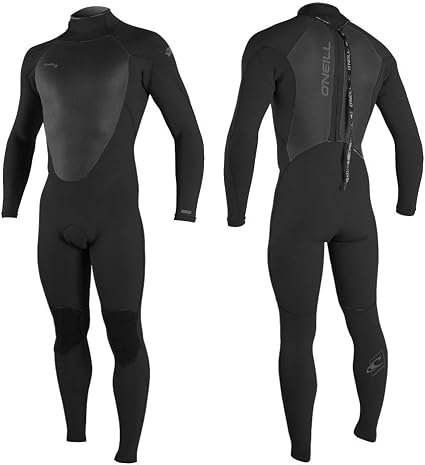
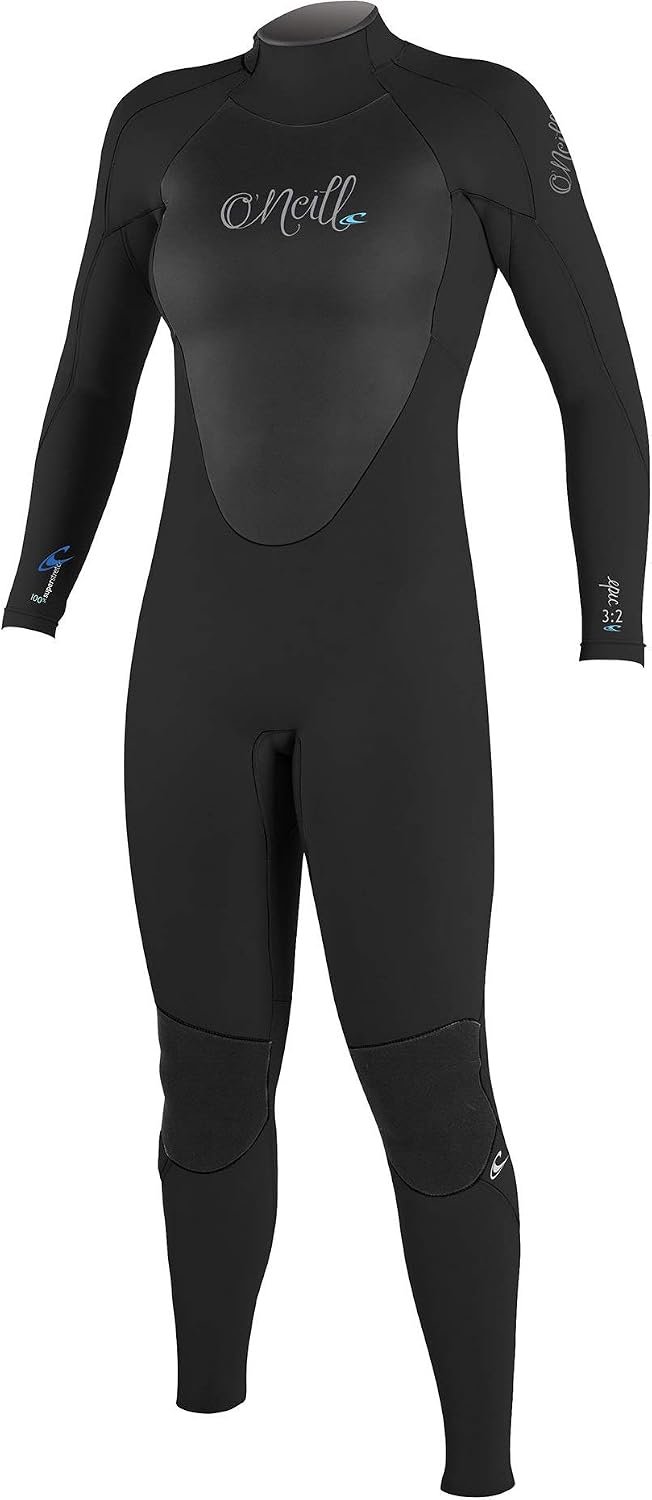
- Real winter thickness from a brand that supports its kit
- Glued and blind-stitched seams resist flushing
- Nothing to puncture, so no catastrophic failure
- Overheats when you paddle hard
- Back zip flushes more than a chest zip
- Wet neoprene plus wind is punishing
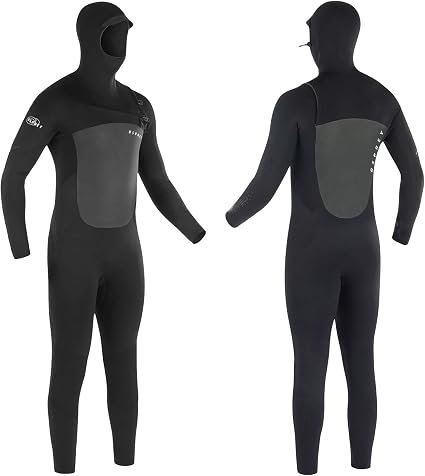
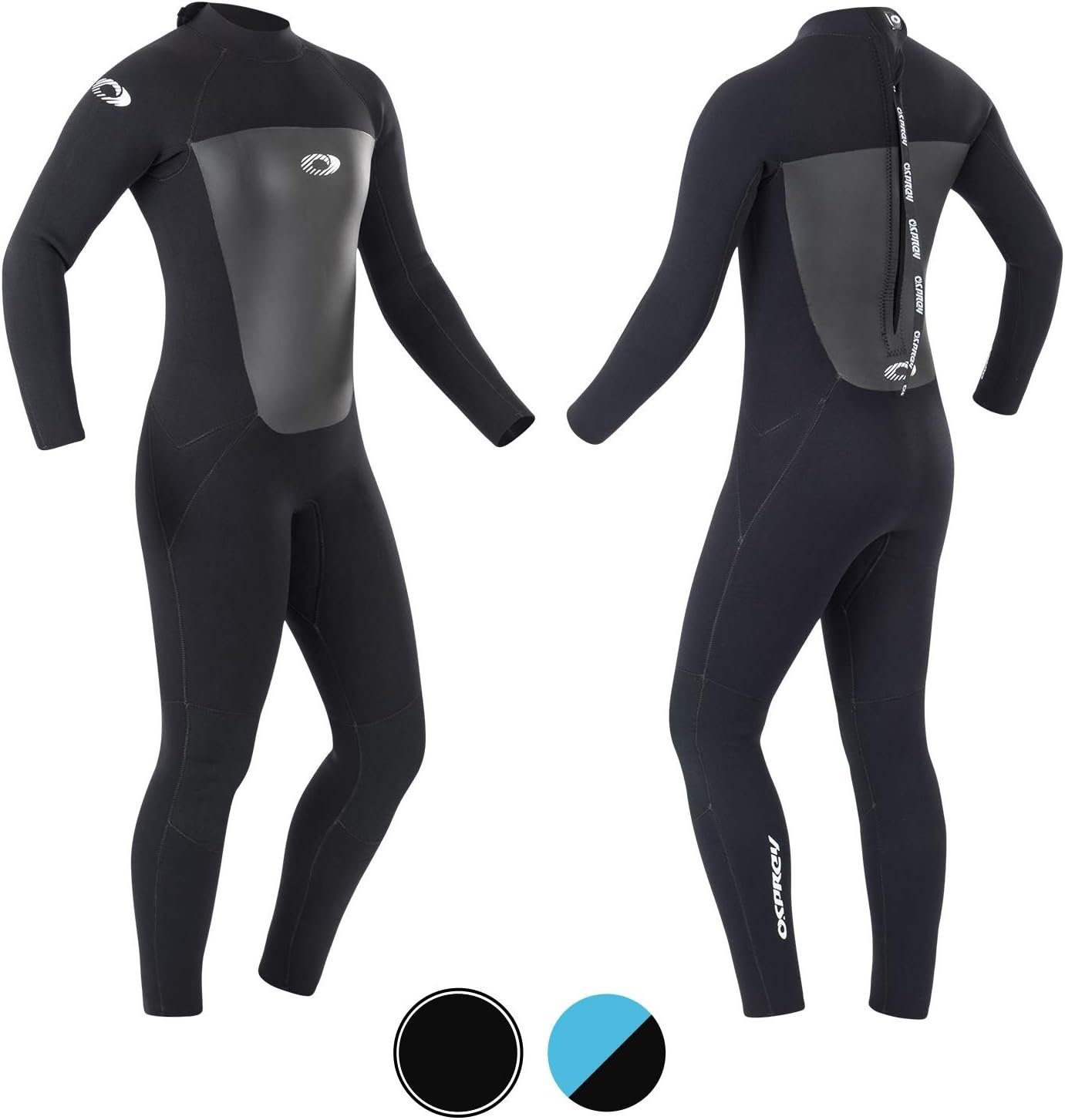
One thing to know: Osprey do not currently make the hooded version in a women’s fit. The women’s link is the plain 5 mm suit, so budget for a separate 3 mm neoprene hood alongside it, and accept that a separate hood is a little more prone to flushing at the neck than an attached one.
- Integrated hood removes the worst flush point
- Roughly half the price of a premium 5/4
- Fleece lining warms up quickly
- Stiffer neoprene restricts the paddle stroke
- Fewer seasons of life than a premium suit
- Fixed hood is warm on the water even when you do not want it
Buoyancy aid
The cheapest item on this list and the only one that is genuinely non-negotiable. In cold water a buoyancy aid does one specific job that no amount of skill substitutes for: it holds your face clear of the water for the sixty seconds when your breathing is not yours to control. Get a 50N buoyancy aid rather than a lifejacket, because you want freedom to move your arms, and get one that fits closely enough that it cannot ride up past your ears in the water.
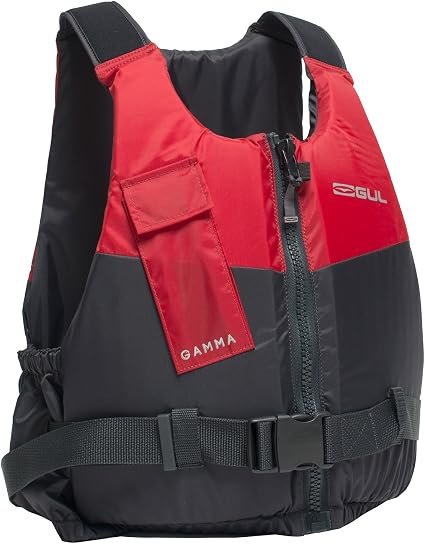
- Works without any conscious action from you
- Adjusts down over bulky winter layers
- Adds a little insulation over the torso
- Wrong size rides up over your face in the water
- Bulk takes getting used to on the paddle stroke
- Fewer pockets than touring-specific vests
Gloves and boots
These two decide how long your session lasts. You can be perfectly warm in the core and still be driving home after twenty minutes because you cannot feel the paddle.
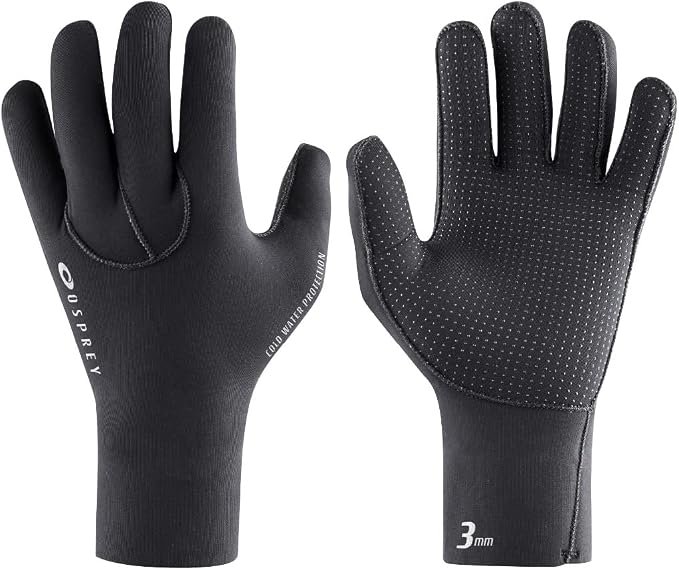
- Keeps fine motor control for buckles and releases
- Works on and off the board, unlike pogies
- Wrist strap stops the flush up your forearm
- Colder than mitts or pogies at the same thickness
- Wet neoprene against the shaft dulls paddle feel
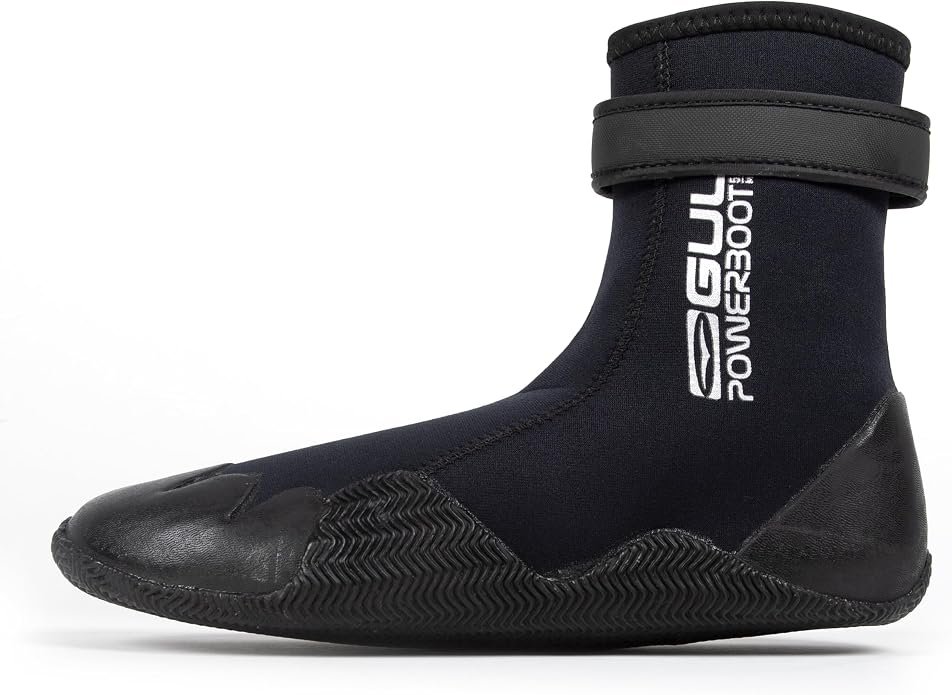
- Removes the most common winter session-ender
- Round toe keeps balance better than split toe
- Protects drysuit socks from slipways and shingle
- Slow to dry between sessions
- Pull-on cuff is a squeeze over thick socks
What changes about the board in winter
If you paddle an inflatable, cold water changes your board’s behaviour in a way that is measurable and almost never mentioned. Gas pressure falls with temperature. Inflate at home in a warm room, drive to a cold lake, and your board is genuinely softer than the gauge said it was.
The actual arithmetic
Inflated indoors at 20 °C to 15 PSI gauge
Absolute pressure = 15 + 14.7 = 29.7 PSI
Launched into 5 °C water, so 293 K becomes 278 K
29.7 × (278 ÷ 293) = 28.2 PSI absolute
Back on the gauge: 13.5 PSI. You have lost about a PSI and a half without a single leak, and on a board rated for 15 that is the difference between stiff and noticeably bendy underfoot.
The fix takes two minutes. Inflate to pressure, float the board for a few minutes so it equalises with the water temperature, then top it back up before you get on. The reverse also applies: never inflate on a cold morning and then leave the board on a sunny car roof or a hot beach, because the same physics runs the other way and over-pressurises the seams.
Two more cold-weather habits worth having:
- Never unroll a frozen board. PVC becomes brittle when cold, and forcing a stiff, cold board open can crack the material or the seams. Store it somewhere heated and give it time to come up to room temperature before you unroll it.
- Check the valve before every winter session. Cold makes the seal less pliable, and a valve that seats perfectly in August can weep slowly in February. A slow leak you would shrug at in summer is a real problem when the swim home is 7 °C.
How to plan a winter session
The RNLI’s own figures are clarifying here. Across 2024 they recorded 134 lifeboat launches to paddleboarding incidents and 413 lifeguard incidents, and in the peak of August, paddlesport callouts ran at roughly three a day. Their National Water Safety Partner Sam Hughes has said that around half of paddleboard incidents come from people being swept out to sea or caught out by offshore winds.
Read that carefully. The thing that gets paddleboarders into trouble is wind, not cold. Cold is what makes the consequences severe. Winter planning therefore has two separate jobs: avoid the situation, and survive it if it happens anyway.
Check wind direction, not just wind speed
An offshore wind is the one that looks like the perfect flat day from the beach. It will push you out effortlessly and then leave you paddling into it to get home, on a board with enormous windage and a person standing on it acting as a sail. If the wind is blowing off the land, either do not go or stay somewhere you could walk back from.
Look up the water temperature, not the air temperature
Buoy data, surf reports and local swimming groups all publish it. If you cannot find a figure for your spot, assume it is colder than the nearest sea reading, because inland water usually is.
Work backwards from sunset
In midwinter Britain the light is gone by around 16:00, earlier the further north you go, and it goes faster than you expect over water. Set a turnaround time before you launch and treat it as fixed. Carry a light regardless.
Leave a float plan and carry comms
Tell someone where you are launching, where you are heading and when you will be back. Carry a phone in a waterproof pouch on your person, not in a dry bag strapped to the board you might get separated from. Cold drains batteries fast, so start the session at full charge.
Paddle into the wind first
Go out against it and come home with it. If conditions build or you run out of energy, the wind is helping rather than trapping you. This one habit prevents a large share of the incidents in those RNLI numbers.
Stay inside your swimming range of shore
Not your summer swimming range. Your cold water, fully clothed, ten-minutes-of-usable-arms range. For most people in winter that is a lot closer to the bank than pride suggests.
What to do if you fall in
You will fall in. Everyone does, and the best paddlers I know plan around it rather than against it. What matters is the first sixty seconds.
Float first. Do not swim.
The RNLI’s Float to Live message exists precisely for this. Lean back, spread your arms and legs, let your face stay clear, and let the gasp reflex pass. It takes under a minute. Trying to swim during cold shock is how people inhale water. Your buoyancy aid does this work for you, which is the whole argument for wearing it.
Get back to the board
The board is flotation, a platform and a bright object rescuers can see. If you are leashed it will be within reach. Get a hand on it before you think about anything else.
Remount now, while you still can
Your grip strength has already started falling and it will not come back. Practise the remount in summer until it is automatic: deep water, PFD on, no rush, so that in winter it is muscle memory rather than a problem to solve. If it is not working after a couple of attempts, stop burning energy on it.
Paddle home prone
Lie on the board and paddle with your arms. It is lower, more stable, less affected by wind, and it works when your legs have stopped cooperating. Standing back up in a rising wind after a swim is how a swim becomes a callout.
Call early, not late
Dial 999 or 112. At the coast, ask for the Coastguard. On inland water, a river, lake, canal or reservoir, ask for Fire and Rescue instead. That distinction catches people out, and a lot of British winter paddling happens inland. Cold water judgement degrades before anything visible happens to you, so the correct moment to call is when you first think you might need to, not when you are certain.
How to warm up afterwards, and why the hot shower is a mistake
Here is the section missing from almost every winter SUP guide. Getting out of the water does not stop you getting colder. Cold blood pooled in your arms and legs returns to your core once you start moving around on land, and your deep body temperature keeps falling. It is called afterdrop, and the Outdoor Swimming Society’s guidance is that it continues for up to thirty minutes, meaning you may be genuinely colder half an hour after your session than you were walking up the beach.
This is what happened to me in that lifeguard training, and it is why people who felt fine at the water’s edge get shaky and stupid in the car park. It is also why the instinctive fix is the wrong one.
Do not jump in a hot shower
Hot water opens up the blood vessels in your skin and limbs and sends that cold peripheral blood to your core faster. For someone genuinely hypothermic that is dangerous, and hot showers and baths are specifically advised against. If you are just cold rather than hypothermic, a warm shower is fine. Sit down in it, because fainting is a real possibility.
Get out of wet kit immediately
Before the flask, before the photos, before the conversation. This is the step people skip and it is the one that matters most. Pat yourself dry rather than rubbing.
Dry layers, and cover the extremities
Hat, gloves, thick socks, more layers than feel necessary. Get out of the wind. Inside a car or behind a changing robe both count.
Warm drink and something to eat
The drink warms you less than it feels like it does, but the calories genuinely help, because shivering is expensive. A covered hot water bottle against the core works well. Never put one directly against skin.
Do not drive until you have stopped shivering
Cold hands and slowed reactions are a driving risk, and afterdrop means you might be at your worst twenty minutes into the journey rather than at the start of it.
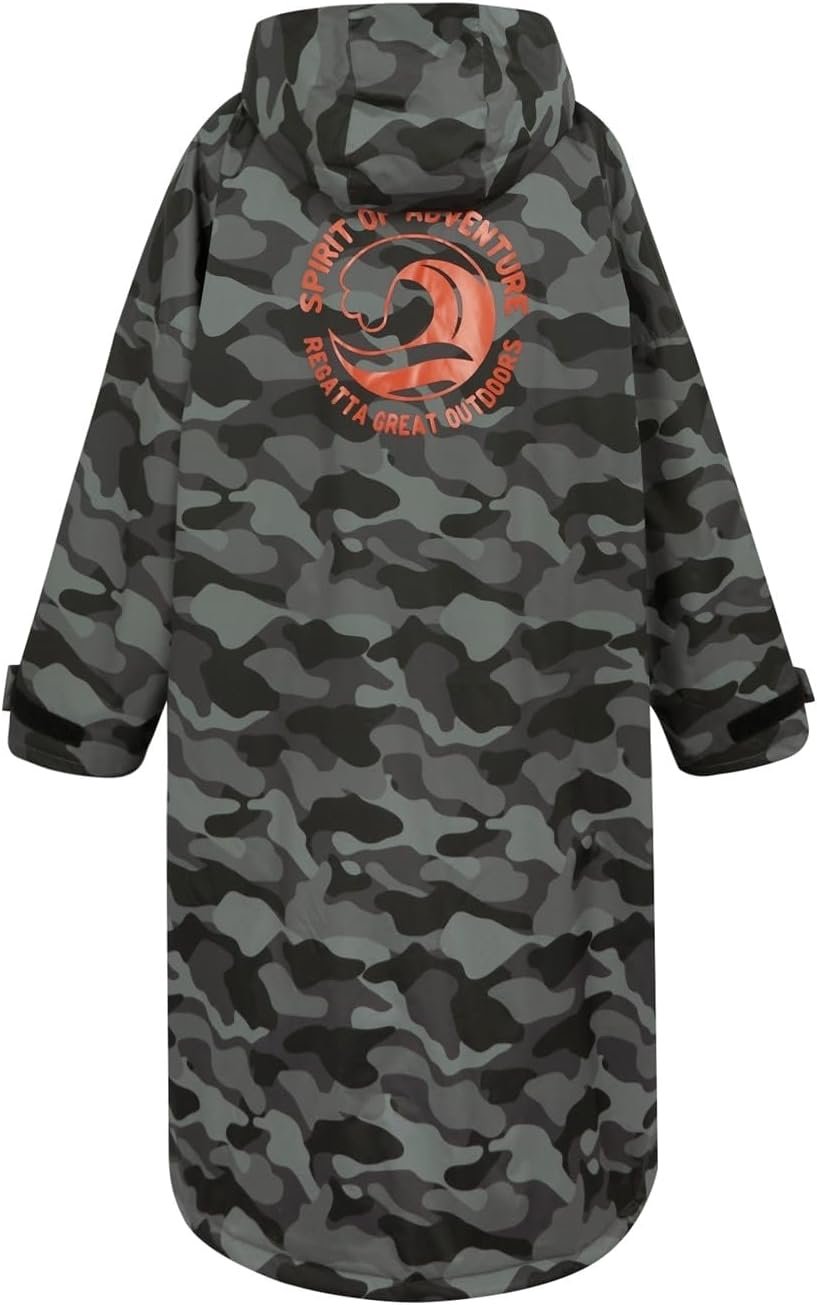
- Blocks the wind at the moment you are most vulnerable
- Lets you change anywhere without a changing room
- Doubles as the outer layer while you drink your tea
- Bulky and slow to dry once the lining is wet
- Sizing runs generous, so check the chart
- No substitute for actually getting the wet layer off
The winter paddleboarding mistakes that actually matter
Winter paddleboarding kit checklist
- Drysuit or 5/4 hooded wetsuit, sized and tested
- Merino or synthetic base layers, no cotton anywhere
- Buoyancy aid, correctly fitted, worn
- Neoprene boots, 5 mm, thin sole
- Gloves, mitts or pogies
- Neoprene hood or beanie, plus a neck gaiter
- Leash matched to the water, quick-release waist belt for tidal or flowing water
- Phone in a waterproof pouch, on you, fully charged
- Whistle attached to the buoyancy aid
- Full change of dry clothes, including hat and thick socks
- Changing robe or a large towel
- Flask of something hot and real food
- Dry bag for the wet kit so it does not soak everything else
- Head torch, in case the light beats you back
Checked before you leave the house
- Wind direction. Is it offshore? If yes, change your plan.
- Water temperature , not air temperature
- Tide times if you are on the coast , and which way it is running
- Sunset time , and a turnaround time earlier than it
- Board pressure, after it has floated for a few minutes , topped up cold
- Float plan sent to someone who will notice : launch point, route, return time
Winter paddleboarding FAQ
Is paddleboarding in winter safe?
Yes, with immersion-appropriate clothing, a worn buoyancy aid, an offshore wind check and a plan for getting warm afterwards. The hazard in winter is not the paddling itself. It is that an ordinary fall, which is trivial in July, becomes serious in 7 °C water. Manage the immersion and winter paddling is no more dangerous than summer paddling, and it is quieter, flatter and often better.
What water temperature is too cold to paddleboard?
There is no temperature at which it becomes impossible, since people paddle among ice, but there are temperatures that change what you must wear. Below 15 °C, cold water shock is a genuine risk and you need thermal protection. Below about 10 °C, that means a drysuit over insulating layers or a 5/4 hooded wetsuit, plus boots, gloves and a hood. The real limit is not the water. It is whether your kit and your plan match it.
Do I really need a drysuit, or will a wetsuit do?
A wetsuit will do, and it is the right answer for SUP surfing or any paddling with repeated full immersion. For flat water touring, which is what most winter paddleboarding is, a drysuit is the better tool, because you spend the session out of the water rather than in it and a wetsuit only works properly when it is being flushed and reheated. The drysuit’s other advantage is range: you change base layers rather than buying a second suit.
What do I wear under a drysuit?
Merino or synthetic base layers, top and bottom, with a thin fleece mid-layer on cold days. Never cotton. The drysuit itself provides no insulation, it only keeps water out, so your warmth comes entirely from what is underneath. Test the combination by getting in the water before you rely on it.
When is UK water at its coldest?
Late February and March, not December or January. Water lags air temperature by around two months, so UK sea temperatures bottom out at roughly 7 to 9 °C in February and March and are still only 8 to 10 °C in April. Spring is the most under-estimated hazard of the year, because mild air makes cold water feel less serious than it is.
Should I use an ankle leash or a waist leash in winter?
Follow the water, not the season. The RNLI’s guidance is that a standard ankle leash suits calm, static conditions, while tidal or flowing water, anywhere there is a risk of entrapment or snagging, calls for a quick-release waist leash. Whichever you use, be able to find and operate the release by feel with cold, gloved hands.
Who do you call if you get into trouble paddleboarding in the UK?
Dial 999 or 112. At the coast, ask for the Coastguard. On inland water such as a river, lake, canal or reservoir, ask for Fire and Rescue instead, because the Coastguard does not cover inland waterways. Make the call from a phone carried on your body rather than one strapped to the board, and make it early: cold water clouds your judgement before you notice it happening.
Does an inflatable paddleboard lose pressure in cold water?
Yes. Air pressure falls as temperature drops, so a board inflated to 15 PSI in a warm room reads roughly 13.5 PSI once it has cooled to 5 °C water, softer underfoot with no leak involved. Inflate, float the board for a few minutes to let it equalise, then top it up. Also avoid unrolling a board that is frozen, because cold PVC is brittle and can crack.
Why do I feel colder after paddling than during it?
That is afterdrop. Cold blood held in your limbs returns to your core once you are out and moving, so your deep body temperature can keep falling for up to thirty minutes after you leave the water. Get out of wet kit immediately, into dry layers out of the wind, and have something warm to eat and drink. Avoid a hot shower, which accelerates the process.
Can I paddleboard alone in winter?
You can, and empty winter water is one of the real pleasures of the sport, but the margin for error is much smaller. If you go alone: stay within easy swimming distance of a shore you could walk back from, carry a charged phone on your body rather than on the board, leave a float plan with someone who will act on it, and set a hard turnaround time. Anything more ambitious is worth doing with a partner.
The honest summary
Winter paddling is not a compromised version of summer paddling. The water is glass, the light is extraordinary, and you will frequently have an entire stretch of coast or lake to yourself. The cost of admission is that you have to be a more deliberate paddler than you are in August: dress for the water rather than the sky, wear the buoyancy aid, check which way the wind is blowing before anything else, and have dry clothes waiting.
If you buy one thing, buy the drysuit, and buy it from someone who will fit you properly. If you buy two, buy the drysuit and a buoyancy aid that fits. Everything else on this page makes winter more comfortable. Those two make it survivable, and comfort is what keeps you going out, which in the end is the entire point.
Safety note: this guide is general information, not a substitute for training. If you are new to cold water, a session with a qualified instructor or a local cold water safety course is the best money you will spend this winter.
Sources
- RNLI, Cold Water Shock and Stand Up Paddleboarding safety
- RNLI, Paddlesport incident statistics, 2024
- Cold Water Boot Camp, The 1-10-1 Principle (Dr Gordon Giesbrecht)
- National Center for Cold Water Safety, The 1-10-1 Myth
- Outdoor Swimming Society, Understanding Hypothermia
- The Beach Guide, UK sea temperature by month
- Paddling Magazine, Gloves, mitts or pogies
- Paddling.com, How to choose the right drysuit