

The Complete SUP Pump Guide
Manual vs Electric — and which one you actually need. An honest field guide from the coves of Bencik, Ayvalık and Cunda.

If you have already bought your first paddleboard — or you are about to — the pump question catches almost everyone off guard. The board arrives rolled up in a bag and suddenly you are staring at a deflated pancake, wondering how long this is going to take. The answer depends entirely on which pump you use. This guide covers everything: how each type works, honest pros and cons, how to use them properly, and which models are worth buying on Amazon UK right now.
Why the pump matters more than you think
Most beginner SUP packages include a manual pump. Some boards come with an electric one. And a few premium kits include nothing at all, expecting you to sort it yourself. The problem is that most buyers do not think about the pump until they are standing on a beach at 8am, arms already tired, halfway through inflating a board that needs to reach 15 PSI.
Here is the reality: inflating a full-size iSUP manually takes 10 to 20 minutes and genuine physical effort, particularly in the final high-pressure stage above 12 PSI. An electric pump does the same job in 8 to 12 minutes with zero effort. That gap matters when you want to spend your energy on the water, not before it.
On the Turkish Aegean coast, summer mornings are warm and glassy. The last thing you want is to arrive at the water already sweaty and tired.
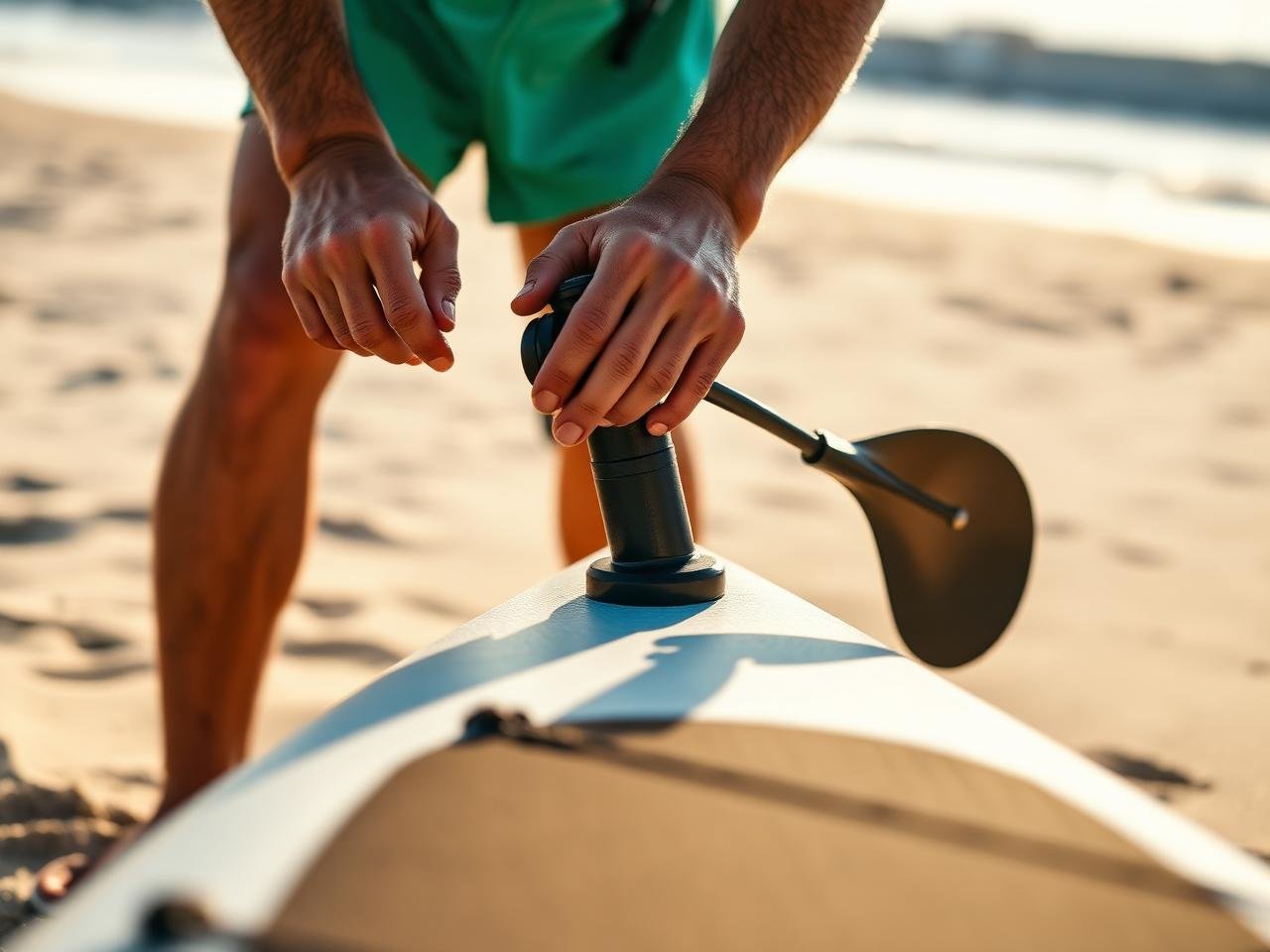
Manual SUP pumps: when they make sense
A manual pump is a double-action hand pump: on both the push and pull stroke, air goes into the board. Most come with a pressure gauge built in and a deflation valve. They work on any board, anywhere, with no power source required.
How to use one properly
Attach the correct nozzle to the board’s valve — most iSUPs use a Halkey-Roberts style. Make sure it clicks securely. Start pumping with both hands on the handle, keeping your back straight. As the board firms up above 10 PSI, switch to a legs-first technique: squat slightly and use your body weight rather than just your arms. Most boards need 12 to 15 PSI — check your manual and do not exceed it.
Once you hit your target pressure, close the valve firmly before removing the nozzle. If you remove the nozzle first you will release a burst of air, which is frustrating and a little embarrassing.
Pros
- Works anywhere — no battery or power needed
- Lighter and more packable
- Often included with the board
- Nothing to charge, nothing to break
Cons
- 10–20 minutes of real physical effort
- Above 12 PSI is genuinely hard work
- You arrive at the water already fatigued
- Not ideal if you paddle frequently
Who it suits
Occasional paddlers, weight-conscious packers, tight budgets — and as a sensible backup even if you own an electric pump.
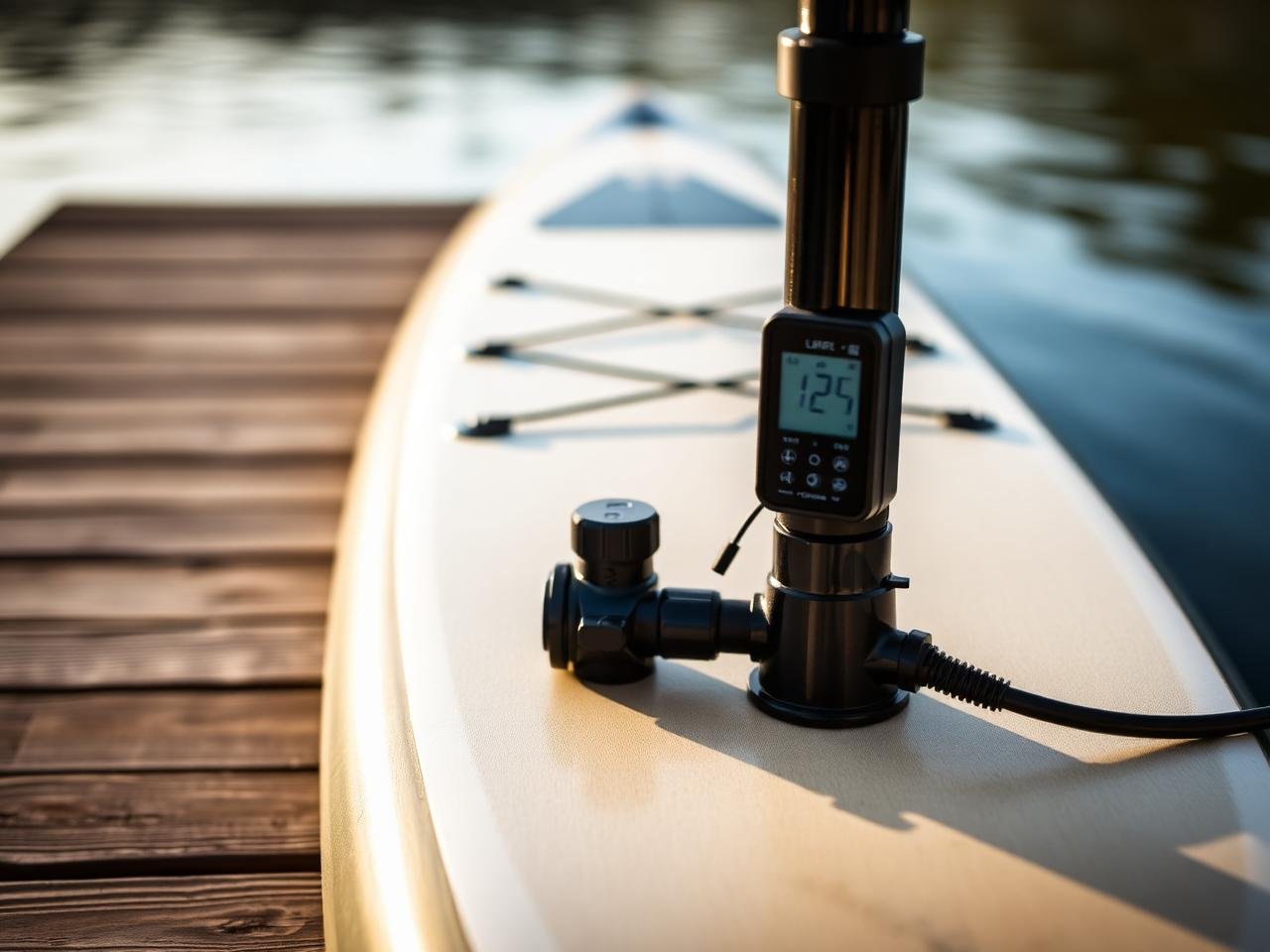
Electric SUP pumps: the game changer
Electric SUP pumps have transformed the beginner experience over the past few years. They inflate automatically, shut off at your target pressure, and can often deflate the board too — saving effort at both ends of the session.
Two flavours exist: rechargeable (battery-powered) and car-powered (12V via cigarette lighter). Battery models are more flexible at remote beaches; car-powered units are cheaper but tie you to the car park.
Dual-stage vs single-stage
Most quality electric pumps advertise dual-stage inflation. This matters because single-stage pumps struggle in the high-pressure range — they can overheat or stall above 12 PSI. A dual-stage pump shifts to a different motor mode for the final push, resulting in faster, more reliable inflation and a longer pump lifespan. If a pump doesn’t specify dual-stage, assume single-stage and budget accordingly.
Pros
- Hands-free — set it and wait
- No fatigue before the water
- Auto-off protects your board
- Powered deflation speeds packing
Cons
- £35–£120+ price tag
- Rechargeable models need charging
- Can overheat under repeated use
- One more thing to pack
Side-by-side: manual vs electric
| Manual Pump | Electric Pump | |
|---|---|---|
| Inflation time | 10–20 minutes | 8–12 minutes |
| Physical effort | Significant | None |
| Price | £15–35 (often included) | £35–120+ |
| Power needed | None | Battery or car socket |
| Portability | Very lightweight | Moderate (500g–1kg) |
| Auto-shutoff | No | Yes (quality models) |
| Deflation | Manual | Powered (most) |
| Best for | Occasional paddlers | Regular paddlers |
The pumps worth buying on Amazon UK
Picked on inflation speed, power options and how well each one fits a beach day. Check Amazon for current pricing.
Rechargeable · Dual-stage
Mojimdo Electric SUP Pump 20PSI
- Dual-stage inflation
- 5 modes incl. custom
- Rechargeable battery
- Smaller battery — not ideal for back-to-back inflations.
The entry point for electric pumps. Handles one to two boards per charge reliably. Good if you paddle solo.
Check price on Amazon UK→Rechargeable + 12V Car
OutdoorMaster Shark 20PSI
- Dual-stage + 12V
- Strong brand reputation
- Pricier than budget alternatives.
The most reviewed SUP pump in this category. Rechargeable plus 12V gives flexibility at any launch spot. Our top recommendation.
Check price on Amazon UK→Long battery · Quiet
CYCPLUS 20PSI Rechargeable
- High battery capacity
- Quiet operation
- Dual-stage reliable
- Higher price point.
Best for couples, families, or anyone inflating more than two boards on a single charge. Worth the investment.
Check price on Amazon UK→No power needed · Backup-ready
Two Bare Feet Dual Action
- Dual-action inflation
- Lightweight
- No charging required
- Physical effort required — especially above 12 PSI.
A dependable manual option, or a backup for your electric pump. Sensible if you only paddle a few times a year.
Check price on Amazon UK→Affiliate disclosure: MediterranSUP earns from qualifying purchases via Amazon Associates links. It costs you nothing extra.
Five tips that save time and frustration
Always check max PSI first
Most iSUPs are rated to 15 PSI. On a hot Mediterranean day, aim for 13 PSI to leave room for thermal expansion.
The high-pressure stage is the hard part
Above 12 PSI is where the work happens. Don’t stop early — an under-inflated board is unstable and slower to paddle.
Deflate fully before rolling
Partial deflation cracks drop-stitch over time. Use powered deflation if you have it. Two extra minutes adds seasons of life.
Store batteries at 50–80% charge
Lithium batteries degrade at 0% or 100%. Park your pump around 70% somewhere cool between trips.
Keep the engine running on 12V pumps
Inflating from a parked battery can drain enough to cause starting issues, especially in older vehicles.
A note on pumping in hot climates
On a 35°C day, the air inside a board expands as it warms. Inflate early in the morning before the sun hits the board, and aim for the lower end of your recommended pressure range.
Electric pump batteries also perform slightly worse in extreme heat — if yours feels sluggish, shade it during inflation.
For walk-in spots like Bencik Koyu, where it’s 150m+ from car park to water, a rechargeable pump is far more practical than a 12V model.
Frequently asked questions
Do I need an electric pump for a SUP board?
No, but it makes a meaningful difference. Manual pumps work and are included with most boards. An electric pump is worth it if you paddle regularly, paddle with family, or want to save energy for the water.
How long does an electric pump take to inflate a board?
Most electric pumps inflate a full-size iSUP to 15 PSI in 8 to 12 minutes, depending on motor power and board volume. Higher-capacity pumps tend to be faster in the final high-pressure stage.
What PSI should I inflate my SUP board to?
Check your board’s manual — most iSUPs are designed for 12 to 15 PSI. For hot-weather paddling, aim for the lower end (12–13 PSI) to allow for thermal expansion. Never exceed the manufacturer’s maximum.
Can I over-inflate my SUP board?
Yes. Over-inflation stresses the seams and drop-stitch construction, and is a real risk in hot weather. Use auto-off on electric pumps and always check the gauge on manual pumps.
Are electric SUP pumps worth the money?
If you paddle more than a handful of times per year, almost certainly yes. A mid-range pump costs £50–£80 and eliminates 10–20 minutes of physical effort every session.
What is dual-stage inflation and why does it matter?
Dual-stage pumps switch to a slower, higher-pressure mode once the board reaches around 7–8 PSI. This makes the final push to 15 PSI faster, more reliable, and easier on the motor. It’s the standard to look for.
Can I use a regular tyre pump for my SUP board?
Not reliably. Tyre pumps are high-pressure, low-volume; SUP boards are large-volume, lower-pressure. Most tyre pumps cannot deliver enough air efficiently and lack the right valve connection.
“The pump is the most underrated part of the SUP kit. Get it right and it changes every session — choose one that fits your paddling frequency, your launch spots, and your patience.”