
Best Dry Bags for SUP 2026
Keep your gear dry without overthinking it
Five bags worth your money, one honest sizing rule, and the three spec details that decide whether your phone survives the session.

The short answer
For stand up paddleboarding, buy a 20-litre roll-top dry bag with welded seams and a D-ring. That combination covers the three things that actually matter: it seals when you roll it, the seams don’t leak under pressure, and it clips to your deck bungees so it stays with the board when you fall. The Unigear 20L is the one I’d hand to most paddlers.
Skip zip closures, skip stitched seams, and buy one size larger than you think you need — a half-full 20L bag seals far better than a 10L bag stuffed to the top.
There’s a particular sinking feeling that comes from unzipping your bag after a session and finding your phone face-down in a puddle. Keys, wallet, the sandwich you were looking forward to — all of it soaked. It happens once. After that, you take dry bags seriously.
Dry bags don’t get discussed nearly as much as boards, paddles or buoyancy aids, but they belong in the same conversation, because they’re the piece of kit that decides whether a fall is a funny story or an expensive afternoon. Whether you’re paddling a sheltered cove or a choppy reservoir, the question isn’t whether you’ll get splashed — it’s whether your gear survives it.
This guide cuts to the options worth buying in 2026, chosen on the things that matter on the water rather than marketing copy: seal integrity, seam construction, useful volume, and whether the bag still works after a full season rather than turning into a crinkly mess. It sits alongside my full SUP packing list, which covers what actually goes inside it.
What makes a good SUP dry bag?
The outdoor market is full of products that look waterproof and aren’t. Four details separate a bag you can trust from one that fails at the worst possible moment — and all four are visible on the product listing if you know where to look.
Roll-top seal, not a zip
Zip-seal bags have their uses, but on a paddleboard — where the bag sits on deck, gets splashed, and occasionally goes fully under — a roll-top with a buckle is the reliable standard. Roll it down three to five times, clip it, and the seal is genuine.
Welded seams, not stitched
Stitched seams create needle holes that let water through under pressure. Welded or heat-sealed seams don’t. This single spec is the difference between splash-resistant and submersion-proof, and it’s usually stated plainly in the listing.
The right volume for your session
A 5L bag holds a phone, keys and a snack. A 20L holds everything for a half-day. Getting this wrong is the most common mistake — too small and you can’t fit what you need, too large and it becomes an unwieldy lump on the nose of the board.
A D-ring or lash point
Most inflatable SUPs have deck bungees. A bag with a D-ring clips into them and stays put when you fall in. A bag without one slides around the deck until it goes overboard, at which point its waterproofing becomes somebody else’s problem.
One thing the spec sheet won’t tell you: colour matters more than you’d think. A bright bag is easier to find in the water if it separates from the board, and easier to find inside itself when you’re rummaging for keys at dusk. Dark bags also absorb real heat sitting on deck in the sun, which matters if you’re carrying anything temperature-sensitive.
Which dry bag size should you buy?
Volume is where most people make the wrong call, so rather than a table you have to interpret, here’s the actual decision in two questions.
Interactive
Dry Bag Size Finder
Two taps. Nothing is saved or sent anywhere.
How long are you usually on the water?
What are you carrying?
Recommendation
Answer both to see your size
The honest default, if you’d rather not think about it, is 20 litres. It’s the size I reach for on nine sessions out of ten.
The rule underneath all of that: buy slightly larger than you think you need. A 20L bag that's half full is easier to roll and seal properly than a 10L bag crammed to capacity, and the seal is the entire product.
All five dry bags compared
Same criteria, side by side. Prices move constantly, so check the current one on Amazon rather than trusting a number in an article.
| Bag | Sizes | Seams | Extras | Best for |
|---|---|---|---|---|
| Unigear | 2L – 40L | Welded | Phone pouch, shoulder strap | The default choice |
| Ultra Dry Adventurer | Single + pouch | Welded | External phone bag, long strap | Phone access on the water |
| CNMTCCO set | 1.5L – 8L (6 bags) | Splash-rated | Six sizes in one purchase | Working out your system |
| Sea to Summit | Multiple small | Fully taped | Packs to nothing | Bag inside a bigger bag |
| Lifeventure | Multiple small | Fully taped | British brand, ultralight | Short, light sessions |
The best dry bags for SUP in 2026
Each one has a specific job, because the right bag depends on how long you're out and what you're carrying.
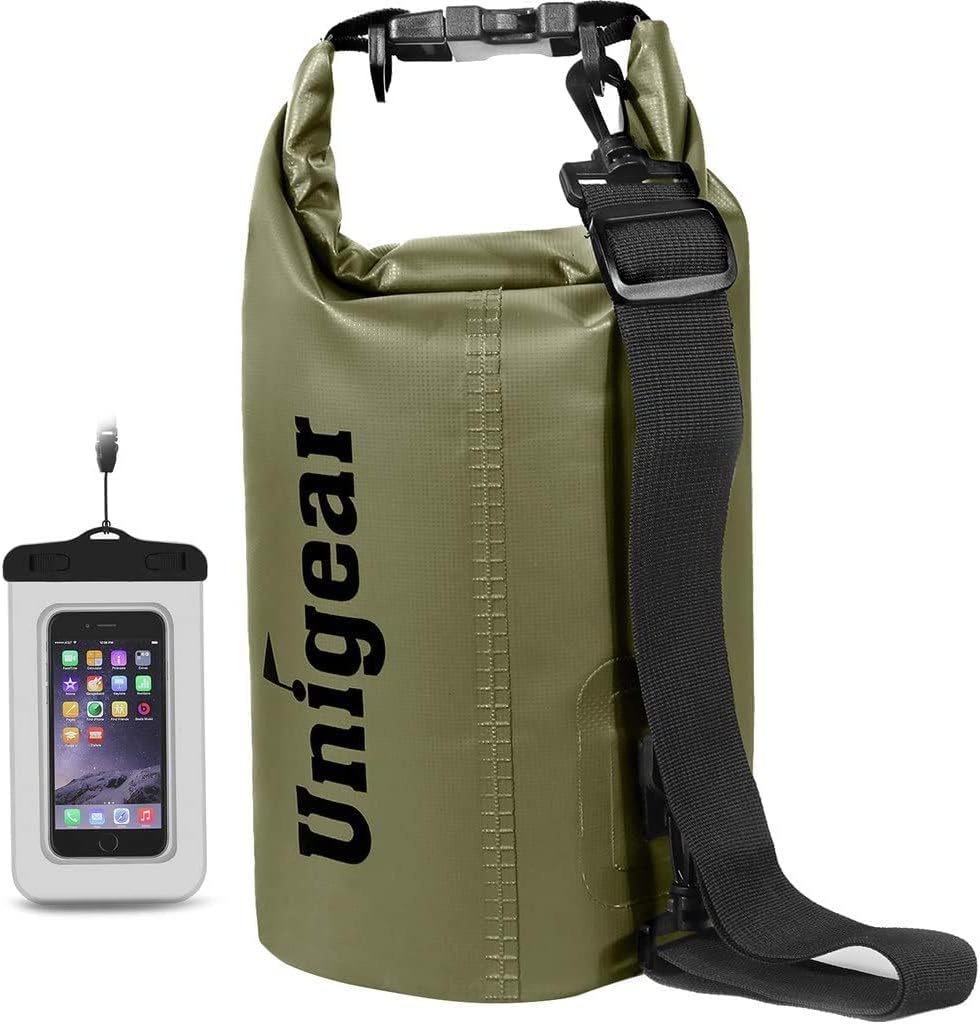
Unigear Waterproof Dry Bag
Six sizes, welded seams, phone pouch included
Unigear is the bag I'd point most people to first. The roll-top seals reliably, the welded seams hold under sustained splashing rather than just light spray, and a waterproof phone pouch comes in the box, which saves you a second purchase.
Six sizes from 2L to 40L make it genuinely flexible, but the 20L is the version to buy: it sits well under deck bungees and holds a full day of kit without turning into a sail. The adjustable shoulder strap sounds like a footnote until you've carried board, paddle, pump and bag across a car park in one trip.
Pros
- Welded seams at a mid-range price
- Six sizes — one brand covers every use case
- Phone pouch included
- Adjustable shoulder strap for the walk in
Cons
- Slightly stiff PVC in cold weather
- Bundled pouch is basic — test before trusting it
Affiliate link — I earn a small commission at no extra cost to you.
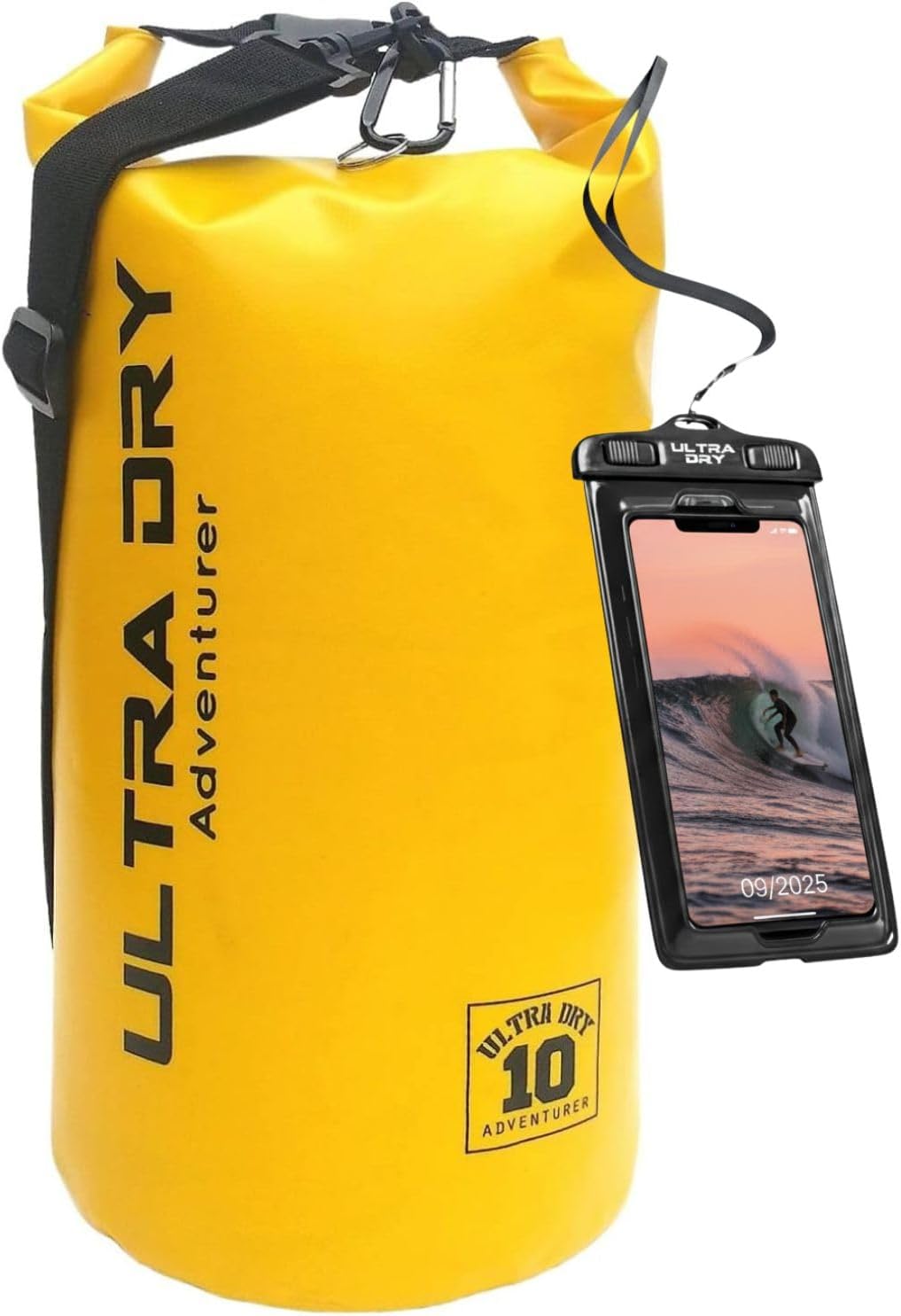
Ultra Dry Adventurer Premium
External phone bag — check your phone without breaking the main seal
The Adventurer's strength is that it bundles the whole system: main bag, separate phone bag, and a long adjustable strap — so there's nothing left to buy afterwards.
The detail that matters is that the phone bag attaches externally. You can take a photo or check the forecast mid-session without unrolling the main bag, which is exactly the moment most people accidentally let water in. Construction is solid: welded seams, a proper roll-top, and material that survives a season rather than going brittle.
Pros
- External phone bag keeps the main seal intact
- Long strap works cross-body
- Nothing else to buy
Cons
- Fewer size options than Unigear
- Bundle costs more than a bare bag
Affiliate link — I earn a small commission at no extra cost to you.
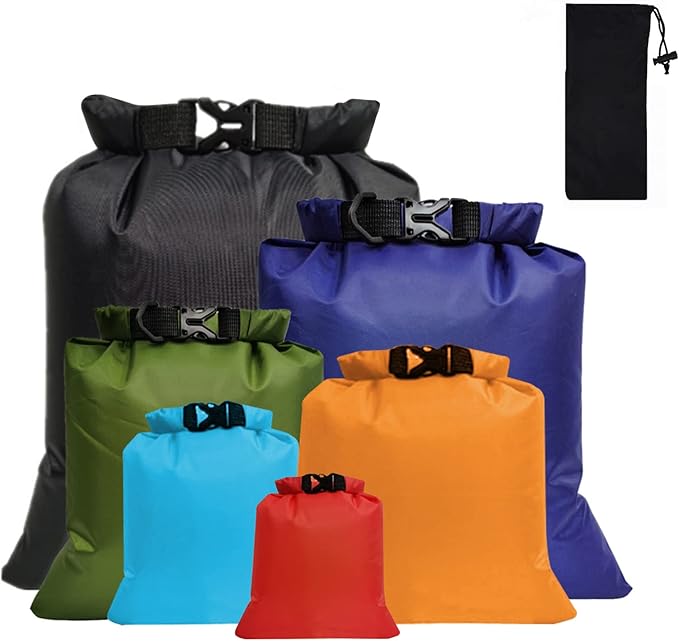
CNMTCCO Dry Bag Set (6 pcs)
Six sizes in one purchase — 1.5L up to 8L
Here's the honest problem with being new to SUP: you don't yet know what you'll carry or how you'll want it organised. Six bags in six sizes solves that cheaply. The smallest takes your phone and keys, a medium one takes sunscreen and snacks, and you keep the rest as your kit evolves.
Be clear about what this is, though — it's splash protection, not submersion protection. For recreational flat-water paddling where you're not expecting to swim, that's plenty. If you're regularly going in, buy a welded-seam bag instead and keep these as internal organisers.
Pros
- Six sizes for the price of one bag
- Ideal as internal organisers
- Low-risk way to find your system
- Light enough to carry spares
Cons
- Splash-resistant, not submersion-proof
- Nothing big enough for a full day alone
Affiliate link — I earn a small commission at no extra cost to you.
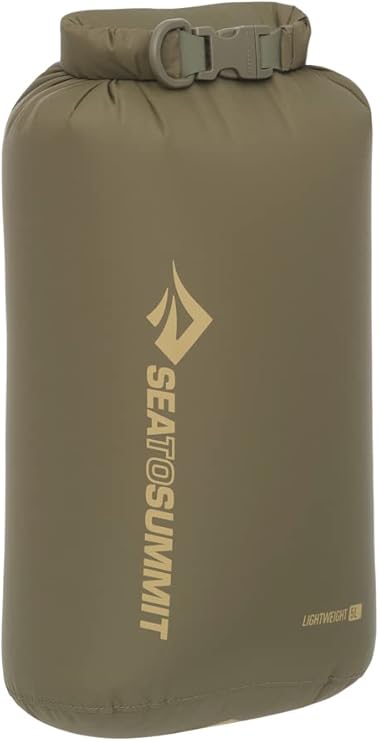
Sea to Summit Lightweight Dry Bag
Siliconized rip-stop, taped seams, packs to a fist
Sometimes you want a small, light bag for a phone and keys and nothing else. Sea to Summit have a long track record in serious outdoor kit, and this reflects it — siliconized rip-stop fabric, fully taped seams, and a roll-top that seals properly without adding bulk.
The reason it earns a place here is that it packs down to almost nothing when empty. That makes it the ideal second bag: it lives inside a larger dry bag keeping small items findable, then becomes your whole kit on days when you only want a short paddle.
Pros
- Respected brand with real pedigree
- Packs to nothing when empty
- Fully taped seams
- Light fabric doesn't stiffen in cold
Cons
- Small sizes only — not a day bag
- Costs more per litre than PVC bags
Affiliate link — I earn a small commission at no extra cost to you.
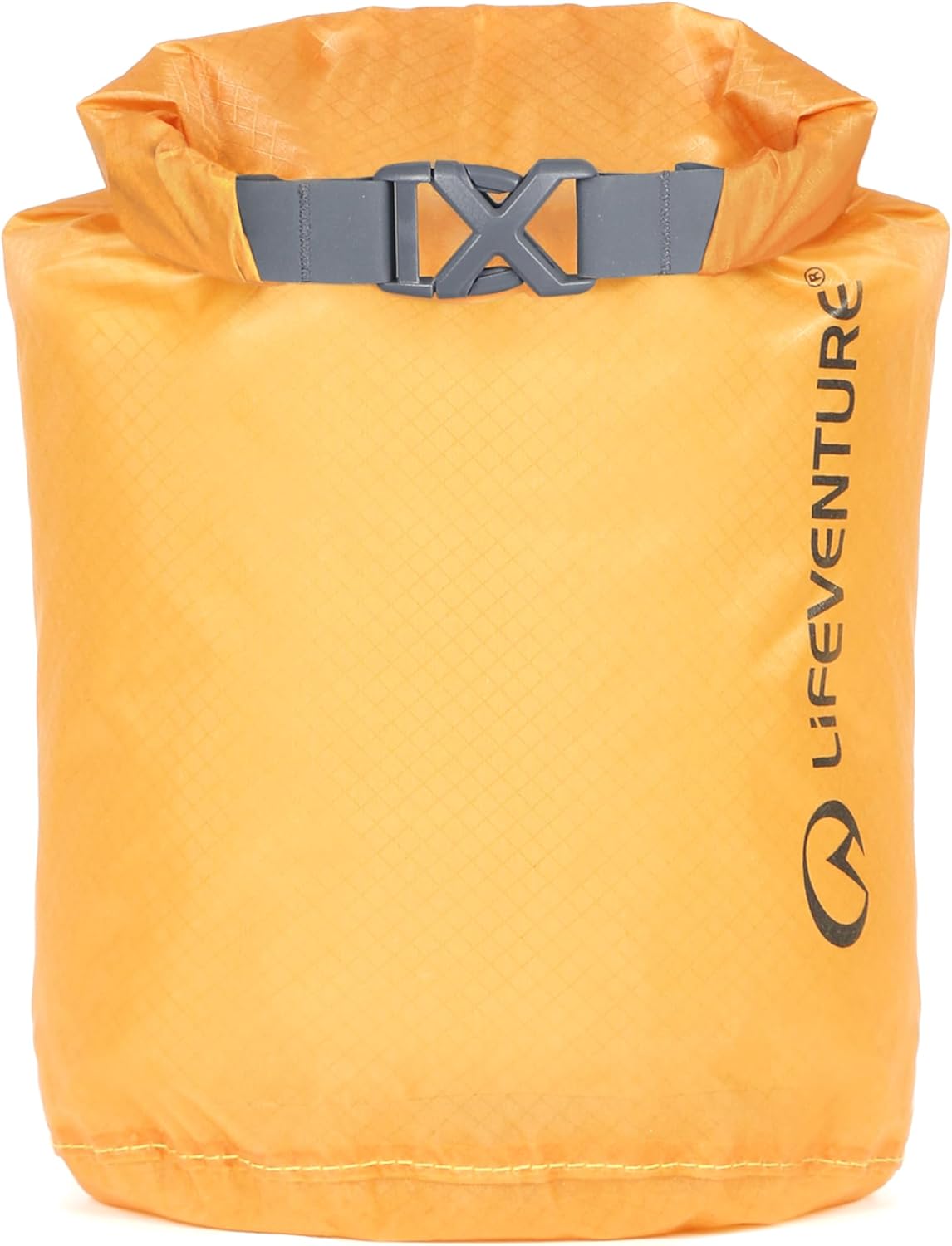
Lifeventure Ultralight Dry Bag
Established British outdoor brand, taped seams, ultralight
Lifeventure have decades of British outdoor kit behind them, and the Ultralight reflects that pedigree without the price tag that usually comes with it. The siliconized rip-stop is light without feeling fragile, and the fully taped seams give reliable protection for splash and deck use.
It occupies the gap between a throwaway bag and a premium expedition one. If you want something that will still be in your kit in three years but you're not paying Ortlieb money, this is where to look — either as your only bag for short paddles, or as the organiser inside a bigger one.
Pros
- Established UK brand, easy support
- Fully taped seams at a fair price
- Genuinely ultralight
- Good second-bag choice
Cons
- Not intended for full submersion
Affiliate link — I earn a small commission at no extra cost to you.
Where you paddle changes what you pack
The same bag, two very different jobs
Hot weather, open coast
Heat changes the equation. A capsize in warm water isn't the danger — dehydration and sun exposure are. That means your bag needs to hold more water and more sun protection, not less, and the volume you actually need creeps upward as the temperature does.
Dark bags absorb real heat sitting on deck, so anything temperature-sensitive wants a light-coloured bag or a spot in the shade of your own shadow. And if you launch early to beat the wind — which is the right call — a proper shoulder strap earns its place on the walk down.
Cold water, UK lakes and estuaries
Here the priority flips. The bag stops being a convenience and becomes part of your recovery plan: dry layers you can actually get into afterwards, and a phone that still works when your hands don't. That argues for welded seams over taped, and for a bright colour you can spot if it separates from the board.
Cold also stiffens PVC. If you paddle through winter, a rip-stop fabric bag stays pliable and rolls properly when a heavy PVC one has gone board-like.
A dry bag only does its job if the right things are inside it. My SUP packing list covers all fifteen items that go in mine — including the six I stopped bringing — and if you haven't sorted the safety layer yet, start with buoyancy aids and leashes.
Frequently asked questions
Do I really need a dry bag, or is a waterproof phone case enough?
A phone case protects one thing. A dry bag protects everything else — keys, wallet, spare layers, sunscreen, snacks, first aid basics. On a short calm-water paddle you might get away with just the case. Anything longer, or anywhere a swim is realistic, you want the bag. They're inexpensive and the downside of skipping one is disproportionate.
Can I submerge a roll-top dry bag completely?
It depends entirely on the seams. Budget bags with stitched seams are splash-resistant, not submersion-proof. Bags with welded seams are generally rated for full submersion. If going fully under is realistic for your paddling — open coast, moving water, or simply falling a lot while you learn — read the seam spec before you read the price.
How do I attach a dry bag to my board?
Thread the D-ring or handle through the deck bungees on the nose, ahead of your stance, with the air squeezed out so it lies flat. For longer paddles, clip it with a short carabiner to a D-ring rather than trusting the bungees alone. Don't put weight behind your feet — it lifts the nose and the board starts catching wind like a sail.
What size should a beginner start with?
A 20L. It's the most versatile size — big enough for a full day, small enough to sit comfortably on the deck. If you're genuinely unsure what you'll carry, the CNMTCCO six-piece set is a cheap way to find out first, then buy one good 20L once you know your own habits.
Are cheap dry bags worth buying?
For calm flat water where a swim is unlikely, yes — a budget set or a mid-range bag is perfectly adequate. For open water, chop or regular use, buy welded seams from a brand with a track record.
How do I stop my dry bag smelling after a season?
Rinse it in fresh water after salt sessions, then dry it inside out and store it unrolled with the top open. Most of the smell people blame on the bag is a damp towel that lived in it for three days. This is exactly why a quick-dry microfibre towel is worth the swap — it's on my packing list for that reason.
Key takeaways
- Roll-top with welded seams is the standard for SUP — not zips, not stitched seams
- 20L is the right first size for most paddlers: versatile, deck-friendly, big enough for a day out
- Unigear is the best all-round pick; Ultra Dry Adventurer wins if you want phone access without breaking the main seal
- Beginners: the CNMTCCO set is the cheapest way to learn what you actually carry
- Buy one size up — a half-full bag seals better than a stuffed one
- Clip it to the deck bungees, forward of your stance, air squeezed out
- A bright bag is easier to find in the water and easier to find inside
Recommendations here are based on seam and closure construction, size range, and long-term feedback from real buyers. As an Amazon Associate I earn from qualifying purchases at no extra cost to you. I don't list prices because they change constantly; check the current price on Amazon before buying.
Final thought
"A poorly sealed bag isn't a dry bag — it's just a bag. Roll it three times, clip it forward, and forget about it."
MediterranSUP · Gear Guides · August 2026